
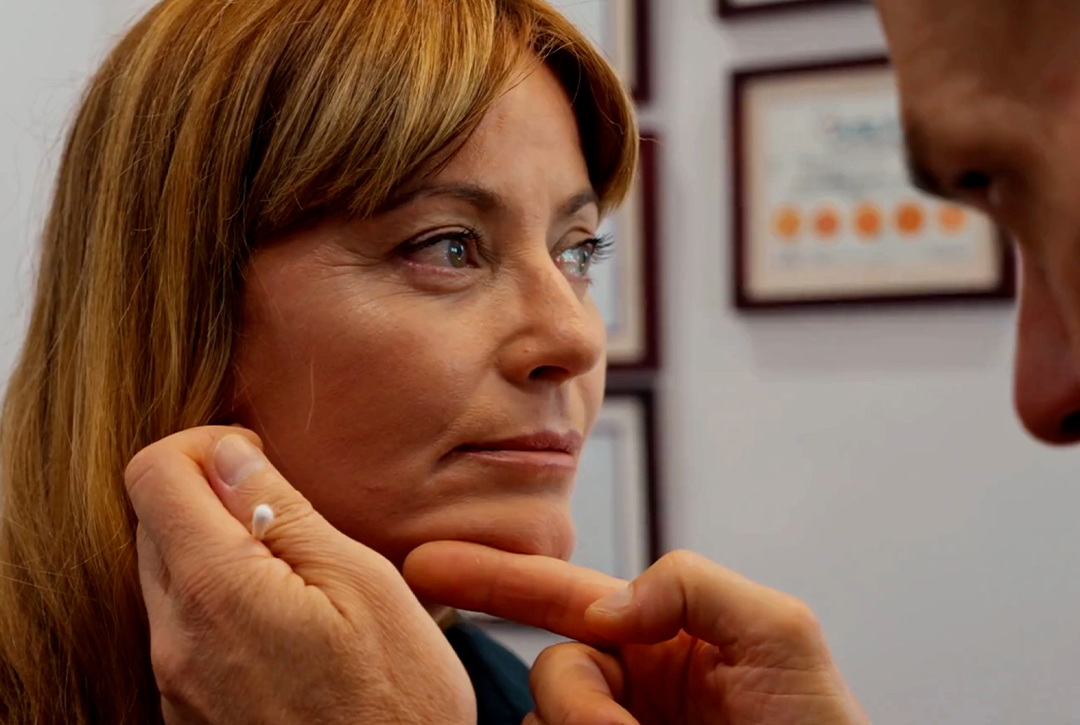
Crepey skin, dullness and loss of firmness are driven by structural dermal changes that require evidence-supported in-clinic treatments, not surface-level fixes, and a careful assessment is the essential first step to identifying which options will genuinely help your skin.
- Crepey texture, dullness and laxity share a common biological root: progressive loss of collagen, elastin and dermal hydration from your mid-twenties onwards.
- Surface skincare alone cannot meaningfully address structural dermal changes; evidence-supported in-clinic treatments work at the level where the changes actually occur.
- Skin boosters (bio-remodelling injectables) deliver deep hydration and stimulate collagen production, with clinical evidence supporting improvement in skin quality, texture and radiance.
- Microneedling with Dermapen 4 creates controlled micro-injury to trigger the skin’s own repair response, with evidence supporting improvements in texture, firmness and collagen density.
- No single treatment addresses every aspect of skin quality; a careful, diagnostic-first assessment determines which combination of approaches suits your skin’s specific presentation.
Crepey skin, dullness and loss of firmness result from declining collagen, elastin and hyaluronic acid in the dermis. Evidence-supported treatments include skin boosters for deep hydration, microneedling with Dermapen 4 to stimulate collagen remodelling, and bio-remodelling injectables. A careful skin assessment guides which combination is appropriate for your skin.
Crepey skin, dullness and loss of firmness: evidence-supported treatment options for improving skin quality
You notice it first in certain lighting. The skin on your cheeks looks slightly less taut than it once did. The texture around your eyes has taken on a finely crinkled quality, like tissue paper that has been smoothed out but never quite returns to flat. Your complexion, which once had a natural luminosity, now looks flat regardless of how much sleep you get or how carefully you apply your skincare.
These changes are not dramatic. They rarely happen overnight. But they are real, and they are driven by specific biological processes that aesthetic medicine can, within realistic limits, meaningfully address.
Crepey skin, dullness and loss of firmness result from declining collagen, elastin and hyaluronic acid in the dermis. Evidence-supported treatments include skin boosters for deep dermal hydration, microneedling with Dermapen 4 to stimulate collagen remodelling, and bio-remodelling injectables. A careful skin assessment guides which combination is appropriate for your skin.
This article goes deeper into each of those treatment categories, explaining the biology behind what you are seeing, what the clinical evidence actually supports, and how a personalised protocol is built around your skin rather than a generic formula. If you are starting from first principles and want to understand where skin quality treatments sit within the broader field of collagen stimulation, the evidence-based overview of regenerative aesthetics and collagen-stimulating treatments provides that wider context.
—
What is actually happening in your skin when it becomes crepey, dull and less firm?
Collagen and elastin loss: the structural changes behind skin laxity
The dermis, the layer of skin beneath the surface epidermis, is largely composed of collagen and elastin fibres arranged in a supportive matrix. Collagen provides tensile strength, whilst elastin allows the skin to stretch and recoil. Together, they give skin its firmness, resilience and the ability to spring back after movement or compression.
From your mid-twenties onwards, collagen synthesis slows gradually. The fibres that remain become less organised over time, and the ratio of mature, structurally sound collagen to fragmented or degraded collagen shifts unfavourably. Elastin, which is produced primarily in early life and replaced very slowly thereafter, becomes sparser and less functional. The result is skin that lacks the structural scaffolding to maintain its former shape and surface smoothness.
This is what creates the crepey appearance that many people notice first on the lower face, neck, décolletage and inner arms. The skin is not simply dry. It has lost the internal architecture that kept it taut, and surface hydration alone cannot restore that.
Why skin loses its glow: the biology of dullness
Dullness is often misunderstood as a hydration problem, but the biology is more layered than that. Several processes contribute simultaneously.
Cell turnover slows with age. In younger skin, the epidermis renews itself roughly every four weeks. As you age, this cycle lengthens, meaning that older, flatter, less light-reflective cells accumulate on the surface for longer before being shed. The result is a complexion that looks flat and lacks the micro-irregularity that catches and scatters light in a way the eye reads as a healthy glow.
Reduced microcirculation also plays a role. When blood flow to the skin is less efficient, the skin receives less oxygen and nutrients, and waste products are cleared more slowly. This contributes to a sallow, tired appearance that persists even when you are well-rested.
Glycation, a process in which sugar molecules bind to collagen and elastin fibres and make them rigid and yellow-tinged, further dulls the complexion over time. This is one reason why skin quality concerns are not simply about volume or structure but about the biochemical environment within the dermis itself.
How intrinsic ageing and external factors accelerate these changes
Intrinsic ageing follows a genetically determined timeline that varies between individuals. However, external factors can significantly accelerate the rate at which these structural changes become visible.
Ultraviolet radiation is the most well-documented accelerant. UV exposure degrades collagen through the upregulation of enzymes called matrix metalloproteinases, which break down the dermal matrix faster than it can be replenished. In a high UV environment like Cape Town, cumulative sun exposure over decades has a measurable impact on skin quality that is often visible well before the changes that intrinsic ageing alone would produce.
Smoking, chronic psychological stress, poor sleep and nutritional deficiencies all impair the skin’s capacity for collagen synthesis and cellular repair. These factors matter not just as lifestyle context but as clinical variables, because they affect how well your skin responds to treatment and how long improvement is maintained.
—
How do skin boosters and bio-remodelling injectables improve skin quality?
What skin boosters are and how they differ from dermal fillers
Skin boosters are injectable treatments that deliver hyaluronic acid directly into the dermis, but they work differently from conventional hyaluronic acid-based dermal fillers. Dermal fillers are formulated to add volume or structural support in a specific location. Skin boosters use a lower-viscosity, more fluid hyaluronic acid that is designed to integrate into the dermal tissue and improve hydration, elasticity and surface quality across a broader area rather than filling a defined space.
Bio-remodelling injectables represent a further development within this category. They use a high concentration of hyaluronic acid in a formulation that, once injected, spreads through the dermis and stimulates the skin’s own production of collagen and elastin. The mechanism is not purely about adding hyaluronic acid to the tissue. It involves a biological signalling effect that encourages the fibroblasts, the cells responsible for producing collagen, to become more active.
This distinction matters because it means bio-remodelling treatments are genuinely regenerative in their intent, not simply hydrating. They are working with your skin’s own repair mechanisms rather than replacing something from the outside.
What the clinical evidence shows for skin texture, hydration and firmness
Clinical studies on skin boosters and bio-remodelling injectables generally show improvements in skin hydration, elasticity and surface texture following a course of treatments. Research indicates that measurable changes in dermal hydration and elasticity are detectable after two to three sessions spaced approximately four weeks apart, with further improvement in the weeks following the final treatment as collagen remodelling continues.
Skin firmness improvements are real but modest. These treatments work at the level of skin quality, not structural volume. If significant tissue laxity or volume loss is present, skin boosters alone are unlikely to produce the degree of lifting that some people hope for. However, for improving the fine crepey texture, dullness and subtle loss of resilience that characterise early to moderate skin quality decline, the evidence is reasonably consistent.
It is also worth noting that hyaluronic acid in the dermis attracts and retains water molecules, which has a secondary benefit for surface radiance. Many people notice that their complexion looks brighter and more even in tone in the weeks following treatment, which reflects both improved hydration and the early stages of collagen stimulation.
Which areas of the face and body respond well to skin boosters?
The face, particularly the cheeks, perioral area and under-eye region, responds well to skin booster treatments. The neck and décolletage are areas where many people notice crepey skin quality changes early and where injectable skin quality treatments are often highly appropriate, because these areas are less suited to the volume-based approaches used on the face.
The inner arms, hands and knees are body areas where skin booster treatments are increasingly used for crepey skin quality concerns. The evidence base for body applications is less established than for facial use, but clinical experience supports their use in these areas when expectations are calibrated appropriately.
—
Can microneedling genuinely improve crepey skin and loss of firmness?
How Dermapen 4 microneedling stimulates collagen remodelling
Microneedling with Dermapen 4 creates controlled micro-injuries in the skin using fine needles that penetrate to a precisely set depth. The depth is adjusted depending on the area being treated and the specific concern being addressed, ranging from superficial settings for surface texture to deeper settings for more significant collagen stimulation.
The micro-injuries trigger a wound-healing cascade. Platelets aggregate at the injury sites and release growth factors. Fibroblasts are recruited and activated, and the skin begins producing new collagen and elastin as part of the repair process. Over the following weeks, this new collagen gradually remodels, improving the structural integrity of the dermis.
What makes Dermapen 4 particularly relevant for crepey skin is the precision of the treatment. The device allows for consistent needle depth and speed across the treatment area, which means the collagen stimulation is distributed evenly rather than being concentrated in isolated points. The adjustable settings also mean that delicate areas such as the neck and periorbital region can be treated safely with appropriate parameters.
What the evidence supports, and what it does not
The evidence for microneedling in improving skin texture, fine lines and overall skin quality is reasonably well established. Multiple clinical studies show histological evidence of new collagen formation following a course of microneedling treatments, and patient-reported improvements in skin smoothness and firmness are consistent across the published literature.
What the evidence does not support is the idea that microneedling can produce significant lifting of lax tissue or meaningfully address moderate to severe skin laxity. Microneedling works at the level of skin quality. It improves the texture, resilience and surface appearance of the skin, but it does not have the structural remodelling capacity of energy-based devices that target deeper tissue planes, nor does it replace the volume restoration that may be needed when significant tissue descent has occurred.
Realistic expectations are important here. A course of microneedling treatments can make a genuine difference to crepey skin texture and to the overall quality and luminosity of the complexion. The improvement is gradual, cumulative and requires maintenance. It is not a single-session solution.
Combining microneedling with other skin quality treatments
Microneedling is frequently used in combination with other skin quality treatments, and the sequencing of these combinations matters. When microneedling is performed alongside topical treatments applied during the procedure, such as hyaluronic acid serums or growth factor preparations, the micro-channels created by the needles enhance the penetration of these actives into the dermis.
Microneedling and skin booster injectables are often used together within a personalised protocol, with the injectable treatments addressing deep dermal hydration and collagen stimulation, whilst the microneedling works on surface texture and the overall quality of the epidermal-dermal junction. The two approaches are complementary rather than redundant, and the combination often produces more noticeable improvement than either treatment alone.
For those interested in how polynucleotide injectables fit into this picture, polynucleotide injections: what the current evidence actually shows and the questions to ask before trying a trending treatment explores that category in detail.
—
What role do skin hydration injectables and collagen-stimulating treatments play in a personalised protocol?
Layering treatments: why sequence and spacing matter
A personalised skin quality protocol is rarely a single treatment. More often, it involves a considered sequence of interventions that address different aspects of skin quality decline at different tissue depths and through different biological mechanisms.
The sequence in which treatments are delivered, and the intervals between them, affects both the safety and the efficacy of the overall protocol. Bio-remodelling injectables, for example, are typically delivered in two sessions approximately four weeks apart, after which the skin continues to respond for several weeks. Introducing microneedling too soon after injectables may interfere with the healing process or create unnecessary inflammation. Spacing treatments appropriately allows each intervention to complete its biological effect before the next is introduced.
Collagen-stimulating treatments also have cumulative effects. The improvement seen after a first session is typically modest. After a second and third session, the results become more apparent as collagen remodelling accumulates. This is why protocols are designed as courses rather than one-off treatments, and why the temptation to add more treatments in quick succession is usually counterproductive.
How VISIA skin analysis informs the right approach for your skin
VISIA skin analysis uses multi-spectral imaging to capture information about your skin at and beneath the surface. Standard photography shows what is visible to the eye. VISIA imaging also reveals subsurface features including UV damage, porphyrins associated with bacterial activity, and the distribution of pigmentation that is not yet visible at the surface.
This information is clinically relevant for skin quality protocols because it allows a more precise understanding of what is driving your skin’s appearance. Two people with similar visible concerns, crepey texture and dullness, may have very different underlying drivers. One may have significant UV-induced dermal damage as the primary issue, whilst the other may have predominantly intrinsic collagen loss with minimal sun damage. The appropriate protocol for each of these presentations is different, and VISIA imaging helps to identify which factors are most significant in your specific case.
At Dr Alek Nikolic’s practice, VISIA analysis is integrated into the initial skin assessment so that treatment decisions are informed by objective data rather than visual impression alone. This diagnostic-first methodology is central to building a protocol that is genuinely matched to your skin rather than based on assumptions.
Realistic timelines and what improvement typically looks like
Understanding what to expect, and when, helps you engage with a skin quality protocol with appropriate patience. Most people do not notice significant change after a single session. The skin’s collagen remodelling process takes time, and the most meaningful improvement typically becomes apparent six to twelve weeks after completing a course of treatment.
In the first few weeks, you may notice improved hydration and a subtle brightening of the complexion. Skin texture improvements and changes in firmness generally follow over the subsequent weeks as new collagen matures. The full response to a course of bio-remodelling injectables or microneedling is often best assessed at the three-month mark.
Maintenance is an ongoing consideration. The biological processes that drive skin quality decline do not stop once treatment is complete. Most protocols include a maintenance phase, typically one to two sessions per year, to sustain the improvement achieved during the initial course.
—
How do you know which skin quality treatment is right for your skin?
The assessment process: what a diagnostic-first consultation examines
A well-structured skin assessment for quality concerns examines several dimensions simultaneously. The visible surface of your skin is the starting point, but it is not the whole picture. The assessment also considers your skin’s history, including previous treatments, sun exposure patterns, skincare routine, hormonal influences and any medications that may affect skin behaviour or healing.
VISIA imaging adds an objective layer to what clinical examination reveals. Ultrasound technology, where relevant, can provide additional information about tissue depth and quality in specific areas. Together, these tools allow a more informed view of what is happening in your skin and what is likely to respond to which type of intervention.
The assessment also considers what you are hoping to achieve and whether your expectations align with what the available evidence suggests these treatments can deliver. Honest calibration of expectations is not a limitation of the consultation process. It is a core part of it.
When skin quality treatments are not the right starting point
Not every presentation of crepey skin, dullness or loss of firmness is best addressed with the treatments described in this article. There are situations where skin quality injectables and microneedling are not the appropriate first step.
If significant volume loss is present, the crepey appearance may be partly a consequence of tissue descent and deflation rather than intrinsic skin quality decline. In that case, addressing the structural deficit first often produces a more meaningful improvement in skin quality than targeting the surface alone.
If there is active inflammation, a compromised skin barrier, or an unmanaged skin condition such as rosacea or eczema, these need to be stabilised before collagen-stimulating treatments are introduced. Treating inflamed or compromised skin with microneedling or injectables can exacerbate the underlying condition and produce unpredictable outcomes.
Significant skin laxity, particularly in the lower face and neck, may require energy-based devices or surgical assessment rather than, or in addition to, the injectable and microneedling approaches described here. A diagnostic-first consultation will identify when a referral or a different treatment category is the more appropriate recommendation.
Questions worth asking before committing to any skin quality treatment
Before agreeing to any skin quality treatment, it is worth asking the following. What specific change is this treatment expected to produce in my skin, and what is the evidence that supports that expectation? How many sessions will I need before seeing meaningful improvement? What are the realistic limits of what this treatment can achieve for my particular concerns? What happens if I do not maintain the treatment?
You should also ask about the assessment process itself. Is your skin being evaluated individually before a protocol is recommended, or is a standard approach being applied? The answer to that question tells you a great deal about whether the recommendation is genuinely suited to your skin.
At Dr Alek Nikolic’s practice, no treatment is recommended without a careful prior assessment. The consultation process is designed to give you the information you need to make a considered decision, not to move you towards a predetermined outcome.
—
Frequently asked questions
What is the most effective treatment for crepey skin on the face?
There is no single most effective treatment, because crepey skin has multiple contributing causes. For most people, the best outcomes come from a combination approach: bio-remodelling injectables to improve deep dermal hydration and stimulate collagen, microneedling with Dermapen 4 to address surface texture and trigger collagen remodelling, and a prescription-grade skincare routine to support the skin between treatments. The right combination depends on your skin’s specific presentation.
Can skin boosters really improve skin firmness, or do they only add hydration?
Skin boosters do more than hydrate. Bio-remodelling formulations in particular stimulate fibroblast activity and encourage the skin to produce new collagen and elastin. Clinical evidence shows measurable improvements in skin elasticity and firmness following a course of treatment. However, the degree of firmness improvement is modest and works best for early to moderate skin quality decline rather than significant structural laxity.
How many microneedling sessions do I need to see improvement in skin texture?
Most protocols involve three to four sessions spaced four weeks apart. Visible improvement in skin texture typically becomes apparent after the second or third session, with further improvement in the weeks following the final treatment as collagen remodelling continues. A single session is unlikely to produce meaningful change in crepey skin texture.
Is loss of skin firmness something that can only be addressed with surgery?
No. Mild to moderate loss of skin firmness can be meaningfully improved with non-surgical collagen-stimulating treatments, including bio-remodelling injectables, microneedling and, in some cases, energy-based devices. However, significant skin laxity, particularly where there is substantial tissue descent, may reach a point where surgical assessment becomes a more appropriate consideration. A careful consultation will help clarify where your concerns sit on that spectrum.
What causes dull skin, and can in-clinic treatments actually make skin look brighter?
Dullness results from slowed cell turnover, reduced microcirculation, glycation of dermal proteins and accumulated surface dead cells. In-clinic treatments can address several of these mechanisms simultaneously. Microneedling accelerates cell turnover
Related Articles
- regenerative aesthetics and collagen-stimulating treatments
– The parent pillar explains the broader category of regenerative and collagen-stimulating treatments; linking here gives readers who want the wider picture a clear pathway from the biological causes section. - polynucleotide injections and what the current evidence shows
– Polynucleotides are sometimes considered alongside skin boosters in a personalised skin quality protocol; linking here allows readers to explore that evidence-based option in depth without duplicating it in this article.

