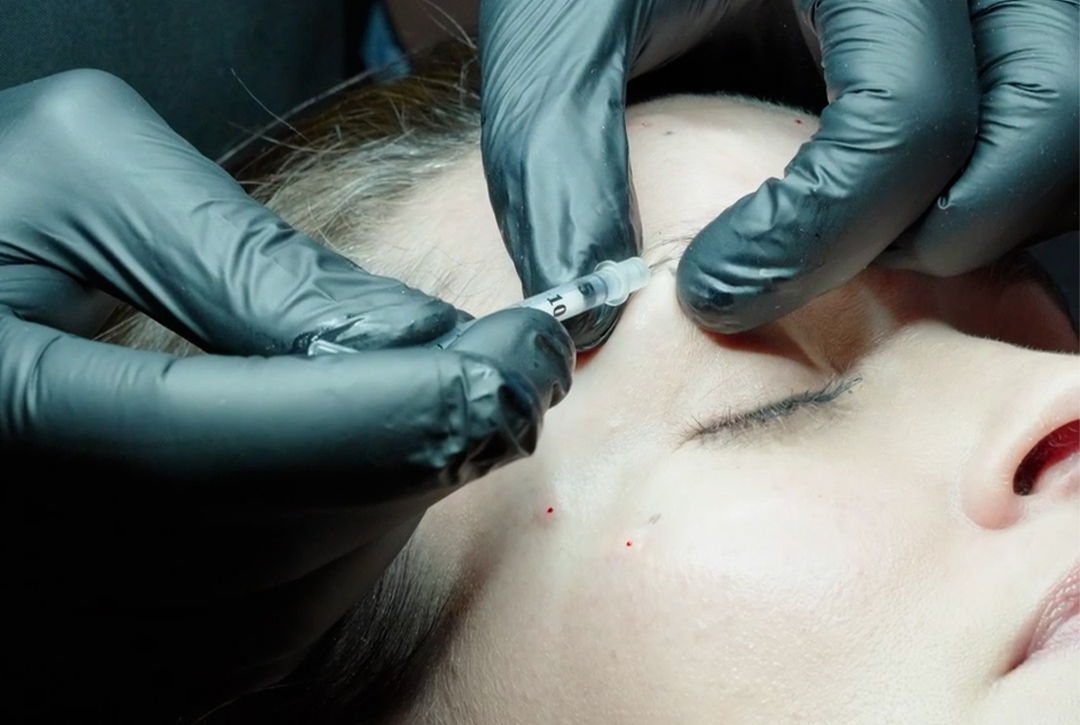
Botulinum toxin can subtly lift the brow and reduce gum show by targeting specific muscles with precision, offering a non-surgical option for two of the most common upper face and smile concerns.
- A non-surgical brow lift works by releasing the depressor muscles that pull the brow down, not by adding volume or cutting tissue.
- The degree of lift achievable depends on your anatomy, existing brow position, and muscle balance, which is why a careful assessment matters before any treatment.
- A gummy smile is most commonly caused by overactive muscles that elevate the upper lip too far, and botulinum toxin addresses this directly at the muscle level.
- Both treatments are technique-sensitive: small errors in placement affect the outcome significantly, making practitioner training and assessment critical.
- Outcomes from both treatments typically last three to four months, and your response to the first treatment informs how your personalised protocol is refined.
Botulinum toxin can lift the brow by relaxing the muscles that pull it downward, allowing the frontalis muscle to elevate it more effectively. For a gummy smile, small injections reduce the upward pull of the upper lip. Both are precise, non-surgical treatments with no downtime, lasting approximately three to four months.
You probably know that botulinum toxin softens frown lines and forehead creases. What surprises many people is that the same treatment, applied with a very different intention, can lift a brow that has started to descend, or reduce the amount of gum that shows when you smile. These are not fringe applications. They are precise, anatomy-driven techniques that depend on understanding which muscles pull the face downward and which ones lift it, then adjusting the balance between them.
Both treatments sit within a broader principle explained in detail across the full guide to botulinum toxin for lift, balance, and the lower face: that botulinum toxin works not by freezing expression, but by restoring a more favourable equilibrium between opposing muscle groups. This article goes deeper into the specific anatomy, clinical decision-making, and practical considerations for brow lifting and gummy smile correction specifically, so you can arrive at a consultation with a clear understanding of what is possible and what is not.
A non-surgical brow lift and gummy smile treatment are often discussed together because both involve the upper face and both rely on the same core mechanism: reducing the downward or upward pull of specific muscles to allow a more balanced resting position. But the anatomy differs considerably, the injection technique differs considerably, and the margin for error in both is small. Understanding the detail matters, whether you are considering one treatment or both.
—
Why your brow position changes over time and what that means for treatment
The muscles responsible for pulling your brow down
Your brow position at any given moment reflects a tug-of-war between the frontalis muscle, which runs vertically up the forehead and pulls the brow upward, and several muscles that pull it downward. The three main depressors are the corrugator supercilii, the procerus, and the orbicularis oculi. The corrugator pulls the brow medially and downward, creating the vertical frown lines between the brows. The procerus pulls the nasal bridge skin downward and contributes to horizontal nose root lines. The orbicularis oculi, the circular muscle surrounding the eye, pulls the outer brow downward as it contracts.
Over time, repeated contraction of these depressor muscles, combined with the gradual descent of soft tissue and the loss of skin elasticity, means the brow begins to sit lower than it once did. The frontalis compensates by working harder, which is why many people develop prominent horizontal forehead lines: they are constantly recruiting the frontalis to keep their brows from feeling heavy. Treating the forehead lines alone without addressing this compensation pattern can sometimes worsen brow heaviness, which is precisely why a careful assessment of the entire upper face matters before any injection is placed.
How asymmetry develops and why one brow often sits lower than the other
Facial asymmetry is normal. Most people have one brow that sits slightly lower than the other, and this difference often becomes more noticeable with age. The reasons are varied. Habitual expression patterns, such as raising one brow more frequently than the other during conversation, can cause one side of the frontalis to become stronger whilst the opposing depressors on the other side become more dominant. Previous dental work, jaw habits, or even sleeping position can contribute to subtle differences in muscle tone across the two sides of the face.
Asymmetric brow position can also be influenced by the underlying bony structure of the orbital rim, the volume of the brow fat pad, and the degree of skin laxity on each side. This is why treating brow asymmetry with botulinum toxin is not simply a matter of injecting both sides equally. It requires a careful analysis of which muscles are dominant on each side, where the asymmetry originates, and what adjustment in muscle balance will bring the brows closer to equilibrium without overcorrecting.
—
How a non-surgical brow lift with botulinum toxin actually works
Botulinum toxin can lift the brow by relaxing the muscles that pull it downward, allowing the frontalis muscle to elevate it more effectively. The treatment does not add volume or physically move tissue. It shifts the balance of pull so that the upward forces have less opposition. For many people, this produces a visible and meaningful lift, particularly at the tail of the brow.
Which part of the brow can be lifted and by how much?
The lateral brow, meaning the outer third, is generally the most responsive to this approach. Relaxing the lateral fibres of the orbicularis oculi reduces the downward pull on the outer brow, allowing the frontalis to lift that area more freely. The medial brow, the inner third, is more complex to address because the corrugator and procerus sit in close proximity to other structures, and over-relaxing the medial frontalis can cause the inner brow to drop rather than lift.
In practical terms, most people see a lift of two to four millimetres at the lateral brow. That may sound modest, but in facial aesthetics, a two-millimetre change in brow position is visible and meaningful. It opens the eye, reduces the appearance of hooding at the outer corner, and creates a more alert, refreshed appearance. The outcome depends on your baseline anatomy, the degree of skin laxity present, and how your individual muscles respond to treatment.
What makes eyebrow asymmetry treatment different from a standard brow lift?
When the goal is to address asymmetry rather than simply lift both brows, the injection protocol becomes more individualised. Dr Alek will assess which side is lower, which muscle groups are contributing to that lower position, and whether the asymmetry is primarily muscular or structural. If it is primarily muscular, targeted relaxation of the dominant depressor on the lower side can bring the brows closer together in height. If it is structural, meaning the underlying anatomy differs between sides, the realistic outcome is improvement rather than perfect symmetry, and that distinction is something worth discussing openly during your consultation.
What to expect at a brow lift consultation in Cape Town
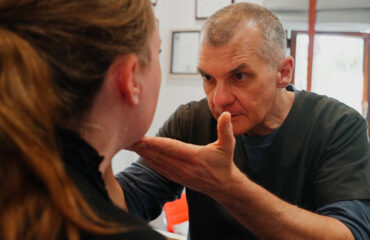
At a brow lift consultation, the assessment begins with your face at rest and in movement. Dr Alek will observe how your frontalis activates, how strongly your depressors pull, and where any asymmetry originates. This dynamic assessment is essential because the same injection placed in two different people can produce quite different outcomes depending on their underlying muscle anatomy. You will discuss your goals, your concerns about looking unnatural, and what a realistic improvement looks like for your specific face. No injection is placed until that picture is clear.
—
What causes a gummy smile and is botulinum toxin the right approach for you?
A gummy smile is defined clinically as the display of more than three to four millimetres of gum tissue above the upper teeth when smiling. It is a common concern, and many people feel self-conscious about it, often describing a reluctance to smile fully in photographs or in social situations. The important thing to understand is that a gummy smile is not a single condition with a single cause. It has at least four distinct anatomical origins, and the treatment approach depends entirely on which one applies to you.
The four main causes of a gummy smile
The first and most common cause is a hyperactive upper lip elevator muscle, specifically the levator labii superioris alaeque nasi. When this muscle contracts excessively during smiling, it pulls the upper lip too far upward, exposing more gum than is aesthetically comfortable. This is the cause that responds best to botulinum toxin.
The second cause is a short upper lip. If the resting length of the upper lip is anatomically short, there is less tissue to cover the gum line even when the lip moves a normal amount. Botulinum toxin can help here too, but the response may be more modest.
The third cause is vertical maxillary excess, a condition where the upper jaw is positioned too far downward in the face, causing the gum line to sit lower than ideal. This is a skeletal cause and is not well addressed by botulinum toxin alone. Surgical or orthodontic intervention may be more appropriate.
The fourth cause involves the gum tissue itself. Gingival hyperplasia, where the gums are thicker or more prominent than average, can make the smile appear gummier even when the lip movement is normal. This is a dental or periodontal concern rather than an aesthetic medicine one.
How to tell whether botulinum toxin is appropriate for your gummy smile
If your gummy smile is driven primarily by a hyperactive lip elevator, botulinum toxin is a well-established and effective option. If it is driven by skeletal anatomy or gum tissue volume, it may not be the right primary approach, and a practitioner who tells you otherwise without a proper assessment is not serving you well. During a consultation, Dr Alek will assess your lip movement, the degree of gum exposure, and the likely contributing cause before recommending any treatment.
Why so many people feel self-conscious about showing their gums when they smile
Research in facial aesthetics consistently indicates that the upper teeth and a small amount of gum tissue are considered the aesthetic ideal when smiling. Showing significant gum tissue tends to draw the eye away from the teeth and the warmth of the smile itself. Many people report that this self-consciousness affects their confidence in professional settings, in photographs, and in social interactions. The concern is legitimate, and the fact that a simple, non-surgical treatment can address it in appropriate cases makes it worth understanding properly.
—
The technical precision behind gummy smile treatment with botulinum toxin
Gummy smile treatment is one of the more technically demanding applications of botulinum toxin in facial aesthetics. The margin between the right dose in the right location and an outcome that affects lip movement or speech is narrower than in many other treatment areas. This is not a reason to avoid it. It is a reason to ensure that whoever treats you understands the anatomy in detail and takes a conservative, measured approach.
Which muscles are targeted and why placement matters so much
The primary target is the levator labii superioris alaeque nasi, a paired muscle running from the nasal bone downward to the upper lip. Small doses of botulinum toxin placed at the correct point along this muscle reduce its upward pull during smiling, allowing the lip to rest slightly lower and cover more of the gum line.
Placement matters enormously. The muscle sits in close proximity to other lip elevators, including the levator labii superioris and the zygomaticus minor. If the injection is placed too laterally, it can affect the smile arc in a way that looks unnatural. If it is placed too deeply, it may diffuse into the orbicularis oris, affecting lip seal and articulation. The dose is also critical. Most practitioners start conservatively, with a small dose on each side, and review the outcome before adjusting. Starting low and titrating upward is far safer than placing a full dose at the first appointment and managing unwanted effects afterwards.
The injection point is typically located just lateral to the nostril base, at the point where the muscle is most accessible and where diffusion to adjacent structures is least likely. Ultrasound technology can support accurate placement in cases where anatomy is less predictable or where previous treatment has created uncertainty about tissue layers.
How long does gummy smile treatment last and what affects your response?
Most people find that gummy smile treatment with botulinum toxin lasts approximately three to four months, which is broadly consistent with other botulinum toxin applications in the face. Some people find the effect lasts slightly longer after several consecutive treatments, as the muscle may gradually reduce in bulk with repeated relaxation over time.
Your individual response depends on several factors: your baseline muscle activity, the dose used, your metabolism of the toxin, and how frequently you have been treated previously. If you are particularly physically active, you may find the effect fades slightly faster. Stress, illness, and significant changes in body composition can also influence how long the treatment lasts. At your follow-up assessment, Dr Alek will review your response and adjust the protocol for your next appointment accordingly.
—
Combining brow lift and gummy smile treatment: what a full upper face assessment involves
Some people come to a consultation with a single concern, either the brow or the gummy smile. Others arrive having noticed both, or having had one concern pointed out to them during an assessment for something else entirely. Combining the two treatments in a single appointment is common and practical, but it requires a full upper face assessment rather than two separate decisions made in isolation.
How Dr Alek approaches upper face botulinum toxin planning
Dr Alek’s approach begins with observation before any discussion of treatment. He will assess your face at rest, in movement, and at full expression, noting how your brow moves, how your upper lip behaves during smiling, and whether there are any existing asymmetries that need to be factored into the plan. This is not a brief visual check. It is a careful, dynamic assessment that informs every injection decision that follows.
When both brow lifting and gummy smile correction are being considered, the planning process accounts for how changes in one area may interact with the other. The upper face functions as a connected system. Adjustments to brow position can subtly influence the perceived balance of the mid-face, and changes to the upper lip can affect how the smile interacts with the overall facial aesthetic. A personalised protocol that considers these interactions produces a more harmonious outcome than treating each concern in isolation.
VISIA skin analysis, whilst primarily used for skin health assessment, can provide useful baseline documentation of facial structure and asymmetry, supporting more precise tracking of changes over time. For brow and gummy smile treatment, Dr Alek may also use photographic documentation at baseline and at follow-up to assess the degree of improvement and guide any dose adjustments.
Downtime, aftercare, and what to expect in the days following treatment
One of the practical advantages of both brow lift and gummy smile treatment is that neither requires any downtime. You can return to normal activities immediately afterwards. There are, however, a few sensible precautions in the first hours.
Avoid lying flat or bending forward for five hours after treatment. Avoid touching or massaging the treated areas for the same five hours, as this can encourage the toxin to migrate to adjacent muscles. Avoid strenuous exercise for five hours after treatment, and avoid significant heat exposure, such as saunas or steam rooms, for 24 hours.
Redness and minor swelling at the injection sites are normal and typically resolve within an hour or two. Occasionally, a small bruise may appear at an injection point, particularly around the brow, where the tissue is more vascular. This is not a complication. It is a normal tissue response and will resolve within a few days.
The onset of effect typically begins between two and five days after treatment, with the full outcome visible at around two weeks. A follow-up review at two weeks allows Dr Alek to assess your response, confirm that the outcome aligns with your goals, and make any minor adjustments if needed. This follow-up is not an optional extra. It is a standard part of the treatment process and an opportunity to refine your personalised protocol for future appointments.
—
Frequently asked questions
How much can botulinum toxin actually lift my brow without surgery?
Most people see a lift of two to four millimetres at the lateral brow, which is visible and meaningful. The medial brow is harder to lift without affecting other structures. The degree of improvement depends on your baseline brow position, the strength of your depressor muscles, and the degree of skin laxity present.
Will a non-surgical brow lift make me look surprised or unnatural?
Not when the treatment is planned carefully. The risk of a surprised appearance arises when the frontalis is left fully active whilst the depressors are over-relaxed, or when the injection placement does not account for your individual anatomy. A conservative, anatomy-driven approach avoids this outcome.
What causes a gummy smile and why do my gums show when I smile?
The most common cause is a hyperactive upper lip elevator muscle that pulls the lip too far upward during smiling. Other causes include a short upper lip, skeletal anatomy, or gum tissue volume. Botulinum toxin is most effective when the cause is muscular.
How long does gummy smile treatment with botulinum toxin last?
Approximately three to four months in most cases. Repeated treatment over time may produce a longer-lasting effect as the muscle gradually reduces in activity. Your individual response will be assessed at each follow-up appointment.
Is there any downtime after a non-surgical brow lift or gummy smile treatment?
No downtime is required. Minor redness or swelling at injection sites resolves within hours. Sensible precautions for the first 24 hours include avoiding strenuous exercise, heat exposure, and pressure on the treated areas.
—
Both brow lifting and gummy smile correction are precise applications of botulinum toxin that reward careful planning. The anatomy is specific, the doses are small, and the difference between a natural-looking improvement and an overcorrected outcome lies in the detail of the assessment that precedes treatment. If you are considering either or both, the right starting point is a consultation that takes the time to understand your face before recommending anything at all.
Related Articles
- Botulinum toxin beyond frown lines: lift, balance and the lower face
– Parent pillar article that provides the broader context for upper face botulinum toxin uses, including the foundational explanation of muscle balance that this cluster article builds upon in greater depth.