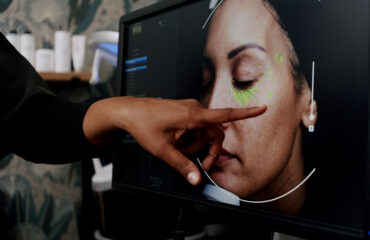
VISIA analysis transforms post-summer skin assessment from subjective observation to objective measurement, revealing hidden UV damage and guiding precisely targeted correction treatments during the optimal autumn recovery period.
- Summer UV exposure causes subsurface skin damage that continues developing for weeks after sun exposure ends
- VISIA analysis provides objective measurements of pigmentation, vascular damage, and texture changes invisible during visual consultation
- Autumn is the optimal clinical window for corrective treatments when reduced UV exposure supports proper healing
- Chemical peels and Dermapen 4 microneedling address specific damage patterns identified through VISIA assessment
- Maintaining dermal skin quality improves long-term injectable outcomes and overall aesthetic results
A post-summer skin audit using VISIA analysis objectively measures UV damage, pigmentation, and collagen changes invisible to the naked eye. This data guides targeted treatments like chemical peels and Dermapen microneedling during autumn when reduced UV exposure optimises healing and results.
Cape Town’s summer sun delivers more than just vitamin D and beach memories. Beneath the surface of your skin, months of UV exposure trigger cellular changes that continue developing long after you’ve packed away your swimsuit. By the time autumn arrives, much of this damage remains invisible to the naked eye, yet it’s actively progressing towards visible pigmentation, texture changes, and accelerated ageing.
A post-summer skin audit using VISIA analysis transforms how we identify and address UV-related damage. This advanced imaging technology measures skin conditions at subsurface levels, revealing damage patterns weeks or months before they become apparent during standard mirror examination. For patients in Cape Town, where summer UV levels rank amongst the highest globally, this objective assessment becomes essential for preventing long-term skin deterioration.
The transition from summer to autumn creates a critical clinical window. Reduced UV exposure during cooler months allows corrective treatments like chemical peels and Dermapen 4 microneedling to work optimally without the complicating factor of ongoing sun damage. However, this window closes quickly as winter dryness arrives and the next summer approaches. Understanding what happened to your skin during summer, what’s currently developing beneath the surface, and how to intervene effectively requires more than visual inspection.
VISIA analysis provides the objective data needed to guide targeted skin correction. Rather than applying generic post-summer treatments, this technology-driven approach identifies your specific damage patterns and quantifies their severity. The result is a personalised treatment strategy addressing your actual skin concerns, not assumed problems. This precision matters because UV damage varies significantly between individuals based on skin type, sun exposure patterns, protection habits, and genetic factors.
Why Post-Summer Is the Critical Window for Skin Assessment
What Happens to Skin During and After UV Exposure
UV radiation penetrates skin at different depths depending on wavelength. UVB rays primarily affect the epidermis, triggering immediate sunburn responses and DNA damage in surface cells. UVA rays reach deeper into the dermis, where they damage collagen fibres, elastin networks, and blood vessels. Both wavelengths stimulate melanocytes to produce excess melanin, creating the tanning response that many perceive as healthy but actually represents cellular defence against ongoing damage.
During summer exposure, your skin activates multiple protective mechanisms. Melanin production increases, cell turnover accelerates, and inflammatory responses attempt to repair damaged DNA. These processes continue for weeks after your last significant sun exposure. Melanocytes remain activated, producing pigment that gradually migrates towards the skin surface. Damaged collagen fibres begin breaking down, whilst inflammatory mediators continue circulating in dermal tissue.
The cellular response to UV damage follows a timeline that extends well beyond the exposure event itself. Surface cells damaged during summer take approximately 28 days to complete their journey to the stratum corneum and shed. Deeper melanin deposits require multiple cell cycles to reach visible layers. Collagen damage triggers enzymatic breakdown processes that continue for months. This delayed manifestation explains why pigmentation often appears darker in autumn than immediately after summer, and why skin texture changes become more apparent weeks after beach holidays end.
The Delayed Response: Why Damage Appears Weeks Later
Melanin synthesis and distribution operate on a delayed timeline. When UV radiation triggers melanocytes, the resulting pigment doesn’t immediately appear at the skin surface. Instead, melanin transfers to surrounding keratinocytes, which then begin their gradual migration upwards through skin layers. This process means that pigmentation forming in January may only become visible in March or April.
Subsurface melanin deposits detected by VISIA represent this developing pigmentation. These deposits exist in deeper epidermal layers, invisible during standard examination but destined to surface as visible brown spots, uneven tone, or melasma patches. Early detection allows intervention before this pigmentation reaches visible layers, making correction significantly easier than treating established surface pigmentation.
Vascular changes follow a similar delayed pattern. UV damage to blood vessel walls triggers inflammatory responses that persist long after exposure ends. Small capillaries damaged during summer gradually become more visible as inflammation continues and vessel walls weaken. Redness that seems to worsen in autumn often reflects this ongoing vascular response rather than new damage.
Why Autumn Creates the Optimal Treatment Environment
Cape Town’s autumn months deliver substantially reduced UV levels compared to summer peaks. This reduction creates ideal conditions for skin treatments that temporarily compromise the protective barrier or increase photosensitivity. Chemical peels remove protective surface layers, whilst microneedling creates controlled injuries that require healing time. Both treatments demand reduced UV exposure to prevent complications like post-inflammatory hyperpigmentation.
Lower temperatures during autumn also benefit treatment outcomes. Reduced heat and humidity mean less sweating, which can irritate freshly treated skin. Cooler weather makes the temporary redness and sensitivity following treatments more comfortable to manage. Patients find it easier to avoid sun exposure when beach activities naturally decrease and outdoor time shifts to cooler parts of the day.
The timing allows for progressive treatment protocols before summer returns. Multiple treatment sessions spaced appropriately can be completed during autumn and winter, allowing skin to fully recover before the next high UV season. This strategic approach addresses existing damage whilst preparing skin to better withstand future sun exposure.
VISIA Analysis: Objective Measurement Beyond Visual Consultation
What VISIA Measures That Your Eyes Cannot See
Standard skin consultation relies on visual examination under clinical lighting. This approach identifies surface conditions like visible pigmentation, obvious texture irregularities, and apparent redness. However, significant skin damage exists beneath the surface, developing silently until it reaches visible layers. VISIA analysis uses multi-spectral imaging to capture what standard examination cannot detect.
The system photographs skin under different light wavelengths, including standard white light, cross-polarised light that eliminates surface reflection, and UV light that reveals subsurface characteristics. Cross-polarised imaging penetrates surface layers to show melanin deposits, vascular patterns, and texture variations beneath the stratum corneum. UV photography reveals porphyrins (bacterial markers) and sun damage in deeper layers.
This subsurface visualisation transforms treatment planning. Rather than waiting for damage to surface and then attempting correction, VISIA allows preventive intervention. Melanin deposits identified beneath the surface can be addressed before they become visible brown spots. Early vascular changes can be treated before broken capillaries develop. This proactive approach delivers superior outcomes compared to reactive treatment of established visible damage.
The Eight Parameters of Comprehensive Skin Assessment
VISIA measures eight distinct skin parameters, each providing specific information about skin health and damage patterns. Spots analysis identifies both surface and subsurface pigmentation, including freckles, age spots, and developing melanin clusters. Wrinkles assessment measures both fine lines and deeper furrows, providing objective data about texture and ageing patterns.
Texture analysis evaluates skin smoothness at microscopic levels, detecting irregularities invisible during visual examination. Pores measurement quantifies pore size and distribution across facial zones. UV spots reveal sun damage in deeper skin layers, showing the cumulative effect of past exposure. Brown spots specifically track melanin concentrations and distribution patterns.
Red areas analysis maps vascular patterns, identifying inflammation, broken capillaries, and redness distribution. Porphyrins detection reveals bacterial activity in pores, indicating potential acne triggers or skin health issues. Together, these eight parameters create a comprehensive profile of your skin condition, moving far beyond what visual consultation alone can determine.
How VISIA Data Changes Treatment Planning
Objective measurement transforms treatment decisions from educated guesses into data-driven strategies. When VISIA reveals extensive subsurface pigmentation, treatment protocols prioritise pigment-targeting approaches like specific chemical peel formulations or vitamin C integration with microneedling. If vascular changes dominate the assessment, treatment emphasis shifts accordingly.
The quantified nature of VISIA data allows precise matching between damage severity and treatment intensity. Mild subsurface pigmentation might respond to light chemical peels and topical protocols, whilst significant melanin deposits require medium-depth peels or combination approaches. This calibration prevents both under-treatment that delivers disappointing results and over-treatment that creates unnecessary downtime or risk.
Treatment sequencing also improves with VISIA guidance. When multiple concerns exist, such as both pigmentation and texture issues, the data helps determine which to address first and how to layer treatments for optimal outcomes. Some conditions respond better to sequential treatment, whilst others benefit from combined approaches. VISIA findings inform these strategic decisions.
Comparing Your Skin to Clinical Norms and Your Own Baseline
VISIA generates comparative data showing how your skin measures against clinical norms for your age and skin type. This context helps patients understand whether their concerns represent normal ageing patterns or accelerated damage requiring intervention. Seeing your skin’s percentile ranking for each parameter provides objective perspective beyond subjective self-assessment.
Equally valuable is the baseline establishment for tracking treatment progress. Your initial VISIA assessment becomes the reference point for measuring improvement. Follow-up scans show quantifiable changes in pigmentation levels, texture measurements, and other parameters. This objective tracking demonstrates treatment effectiveness and guides protocol adjustments.
The comparative data also supports realistic expectation setting. When VISIA shows significant UV damage accumulation, patients better understand why correction requires multiple treatments rather than a single procedure. Conversely, when damage proves less severe than feared, treatment plans can be appropriately scaled.
Common Post-Summer Damage Patterns VISIA Identifies
Subsurface Pigmentation and Melasma Development
Subsurface melanin deposits represent one of the most common post-summer findings in Cape Town patients. VISIA’s UV photography reveals these deposits as dark areas beneath the skin surface, often distributed across cheeks, forehead, and upper lip. These deposits indicate melanocytes that became overactive during summer exposure and continue producing excess pigment.
Melasma development frequently accelerates following summer UV exposure. This hormonally influenced pigmentation disorder worsens with sun exposure, heat, and visible light. VISIA analysis reveals melasma’s characteristic pattern, showing both surface pigmentation and deeper dermal deposits. The deeper component explains why melasma proves particularly challenging to treat and why it often returns after initial improvement.
Freckles and solar lentigines (age spots) also show increased density and darkness following summer. VISIA quantifies this increase, showing both the number of pigmented lesions and their intensity. This objective measurement helps differentiate between normal freckling that will fade naturally and persistent pigmentation requiring active treatment.
Vascular Changes and Redness Distribution
UV exposure damages blood vessel walls, leading to increased visibility and persistent redness. VISIA’s red areas analysis maps these vascular changes, revealing patterns invisible to standard examination. Common findings include diffuse redness across cheeks, visible capillaries around the nose, and inflammatory patterns suggesting rosacea triggers or progression.
The distinction between temporary inflammation and permanent vascular damage becomes clear through VISIA imaging. Temporary redness from recent sun exposure appears as diffuse red areas without distinct vessel patterns. Permanent damage shows as clearly defined capillaries and concentrated red zones indicating structural vessel changes.
Post-summer assessments frequently reveal increased redness in patients who spent significant time in heated environments or experienced sunburn. The combination of UV damage and heat exposure creates a particularly damaging scenario for facial blood vessels. VISIA quantifies this damage, providing data to guide treatment decisions.
Texture Irregularities and Pore Congestion
Summer’s combination of increased sweating, sunscreen use, and UV exposure often leads to texture changes and pore congestion. VISIA’s texture analysis reveals surface irregularities at microscopic levels, detecting roughness and unevenness that feels noticeable but appears minimal during visual examination.
Pore analysis frequently shows enlargement and congestion following summer. Increased sebum production in response to heat, combined with sunscreen residue and dead cell accumulation, creates the perfect environment for pore blockage. VISIA quantifies both pore size and distribution, identifying zones requiring targeted treatment.
Porphyrin detection reveals bacterial activity within pores, indicating potential breakout triggers or ongoing congestion issues. This parameter proves particularly valuable for patients experiencing post-summer breakouts or persistent congestion despite regular cleansing routines.
Collagen Deterioration and Skin Laxity Indicators
UV radiation’s impact on dermal collagen represents the most significant long-term consequence of sun exposure. Whilst VISIA doesn’t directly measure collagen levels, wrinkle analysis and texture assessment provide indicators of collagen health. Increased fine lines, particularly in areas receiving direct sun exposure, suggest collagen network damage.
The pattern of wrinkle development reveals UV impact. Crow’s feet, forehead lines, and lip lines often show measurable deepening following summer exposure. VISIA’s quantification of these changes provides objective evidence of collagen deterioration, supporting recommendations for collagen-stimulating treatments.
Skin laxity, whilst not directly measured by VISIA, correlates with texture changes and wrinkle patterns. Areas showing both increased texture irregularity and wrinkle development typically exhibit reduced collagen support, indicating where treatments like microneedling will deliver the greatest benefit.
Targeted Treatment: Chemical Peels for Post-Summer Correction
How Chemical Peels Address VISIA-Identified Pigmentation
Chemical peels work through controlled exfoliation, removing damaged surface layers whilst stimulating cellular turnover and melanin dispersal. For post-summer pigmentation identified through VISIA, specific peel formulations target melanin clusters at various depths. Glycolic acid peels excel at surface pigmentation, whilst TCA formulations reach deeper melanin deposits.
The mechanism involves breaking up melanin aggregations and accelerating their removal through enhanced cell turnover. Peels also inhibit tyrosinase, the enzyme responsible for melanin production, reducing future pigment formation. This dual action addresses both existing pigmentation and prevents new deposits from forming.
VISIA data guides peel selection by revealing pigmentation depth and distribution. Superficial pigmentation responds to lighter peels with minimal downtime, whilst deeper deposits require stronger formulations. The imaging also identifies areas needing focused treatment versus zones requiring only maintenance.
Light Versus Medium Peels: Matching Depth to Damage
Light chemical peels penetrate only the epidermis, making them suitable for surface pigmentation, mild texture issues, and general skin refreshing. These peels typically use alpha-hydroxy acids like glycolic or lactic acid at concentrations producing controlled surface exfoliation. Recovery requires only a few days, with minimal visible peeling.
Medium-depth peels reach the upper dermis, addressing more significant pigmentation, deeper texture irregularities, and moderate sun damage. TCA peels fall into this category, producing more dramatic results but requiring longer recovery periods. The skin undergoes visible peeling for approximately one week, with redness persisting slightly longer.
VISIA findings determine appropriate peel depth. When subsurface pigmentation exists in deeper epidermal layers, light peels prove insufficient. Medium peels become necessary to reach and disperse these melanin deposits. Conversely, when damage remains superficial, aggressive peels create unnecessary downtime without proportional benefit.
Why Autumn Timing Reduces Post-Peel Complications
Post-inflammatory hyperpigmentation represents the primary complication risk following chemical peels, particularly in patients with darker skin types. This complication occurs when healing skin receives UV exposure, triggering melanocyte activation and creating new pigmentation darker than the original concern. Autumn’s reduced UV levels significantly lower this risk.
The healing process following chemical peels temporarily compromises the skin barrier, increasing photosensitivity. Even with diligent sunscreen use, summer UV levels can penetrate healing skin and trigger pigmentation. Autumn treatment allows healing to occur during naturally lower UV exposure, protecting vulnerable skin.
Temperature considerations also favour autumn timing. Post-peel skin feels sensitive and may experience temporary redness. Cooler autumn weather makes this sensitivity more comfortable than summer heat. Reduced sweating during healing also decreases irritation risk and infection potential.
Expected Recovery and Progressive Results
Light chemical peels typically involve minimal visible peeling, with skin appearing slightly pink for one to two days. Patients can usually resume normal activities immediately, though sun protection remains essential. Results become apparent within one week as fresh skin emerges and pigmentation lightens.
Medium-depth peels require more substantial recovery. The skin darkens initially, then begins peeling around day three or four. Peeling continues for approximately one week, revealing fresh skin beneath. Redness persists for one to two weeks, gradually fading as healing completes. Full results develop over four to six weeks as cellular turnover continues and pigmentation disperses.
Progressive improvement continues beyond initial healing. Collagen stimulation triggered by the peel develops over several months, improving texture and firmness. For optimal pigmentation correction, a series of peels spaced appropriately delivers superior results compared to a single treatment.
Dermapen 4 Microneedling: Collagen Restoration and Texture Correction
How Microneedling Addresses UV-Related Collagen Damage
Dermapen 4 creates controlled micro-injuries in the skin using fine needles that penetrate to specific depths. These micro-injuries trigger the body’s natural healing response, stimulating collagen and elastin production. For UV-damaged skin, this collagen stimulation directly addresses the structural deterioration caused by summer sun exposure.
The mechanism involves activating fibroblasts, the cells responsible for collagen production. When skin sustains controlled injury, fibroblasts migrate to the treatment area and begin synthesising new collagen fibres. This new collagen improves skin structure, reducing fine lines, improving texture, and enhancing overall firmness.
Treatment depth adjustment allows targeting of specific damage levels. Superficial needling addresses surface texture and fine lines, whilst deeper penetration reaches dermal layers where significant collagen loss occurs. VISIA findings showing extensive texture irregularities and wrinkle development indicate the need for deeper treatment protocols.
Vitamin C Integration for Enhanced Pigmentation Control
Dermapen 4 treatments create temporary channels through the stratum corneum, dramatically increasing absorption of topically applied ingredients. Vitamin C serum applied during microneedling penetrates far deeper than possible with standard topical application, delivering concentrated antioxidant and brightening benefits directly to target layers.
Vitamin C addresses post-summer pigmentation through multiple mechanisms. It inhibits tyrosinase activity, reducing melanin production. It provides antioxidant protection against free radical damage. It supports collagen synthesis, complementing the mechanical stimulation from microneedling itself. This combination approach addresses both pigmentation and structural damage simultaneously.
The integration proves particularly valuable for patients showing both pigmentation and texture concerns on VISIA assessment. Rather than requiring separate treatments for each issue, vitamin C microneedling addresses both concerns in a single protocol.
Treatment Depth and Frequency Based on VISIA Findings
VISIA data guides Dermapen treatment parameters. Mild texture irregularities respond to shallow needling at 0.5 to 1.0 millimetre depth. Moderate damage requires 1.0 to 1.5 millimetres. Significant collagen deterioration indicated by pronounced wrinkles and texture changes may warrant depths up to 2.0 millimetres in appropriate areas.
Treatment frequency depends on damage severity and skin response. Mild concerns typically respond to three treatments spaced four weeks apart. Moderate to severe damage may require four to six sessions for optimal correction. VISIA follow-up scans track progress, allowing protocol adjustments based on measured improvement.
Recovery time varies with treatment depth. Shallow microneedling produces redness for 24 to 48 hours with minimal downtime. Deeper treatments create more pronounced redness lasting three to five days. All depths benefit from autumn timing when reduced UV exposure supports optimal healing.
Combining Dermapen with Chemical Peels for Comprehensive Correction
Strategic combination of chemical peels and Dermapen microneedling addresses multiple damage patterns identified through VISIA assessment. Peels excel at pigmentation correction and surface renewal, whilst microneedling targets collagen stimulation and deeper texture issues. Together, they provide comprehensive post-summer correction.
The typical sequence begins with chemical peels to address pigmentation and prepare the skin. Once pigmentation shows improvement, microneedling treatments focus on collagen restoration and texture refinement. This order prevents microneedling from potentially dispersing pigmentation deeper into skin layers.
Treatment spacing ensures adequate healing between procedures. Generally, four weeks separates chemical peels from microneedling sessions. This interval allows complete barrier recovery and minimises complication risk. Your treatment plan specifies exact timing based on your VISIA findings and skin response.
The Connection Between Skin Quality and Injectable Outcomes
Why Dermal Health Affects Filler and Toxin Results
Injectable treatments like dermal fillers and anti-wrinkle toxins work within the skin structure, making dermal health directly relevant to treatment outcomes. Healthy collagen networks provide better support for hyaluronic acid fillers, allowing more natural integration and longer-lasting results. Compromised collagen from UV damage can affect how fillers settle and how evenly they distribute.
Skin quality influences the visible outcome of injectable treatments. When surface texture shows significant irregularities, even expertly placed filler may not achieve the desired smooth appearance. Addressing texture through treatments like microneedling creates an optimal canvas for injectable enhancement.
Anti-wrinkle toxin treatments also benefit from good skin quality. Whilst toxins work on underlying muscles rather than skin directly, the overlying skin condition affects the final aesthetic result. Healthy, well-hydrated skin with good collagen support shows toxin results more favourably than thin, sun-damaged skin.
Building a 12-Month Aesthetic Treatment Strategy
Comprehensive aesthetic outcomes require strategic planning that addresses both skin quality and volume enhancement. A 12-month treatment strategy typically begins with skin correction during autumn and winter, followed by injectable treatments in spring when skin health has improved.
This sequencing allows each treatment type to work optimally. Skin correction treatments like peels and microneedling occur during low UV months when healing conditions are ideal. Once skin quality improves, injectable treatments deliver enhanced results. Maintenance treatments then sustain improvements throughout the year.
VISIA assessments at strategic intervals track progress and guide protocol adjustments. Initial assessment establishes baseline and determines treatment priorities. Follow-up scans at three to six months show improvement and identify any remaining concerns. Annual assessments maintain long-term skin health monitoring.
Sequencing Skin Correction Before Injectable Treatments
Clinical experience shows superior injectable outcomes when skin quality is addressed first. Patients who undergo chemical peels or microneedling before filler treatments often achieve their aesthetic goals with less product and more natural results. The improved skin structure provides better support and integration for injectable materials.
The typical sequence involves completing a series of skin correction treatments, allowing full healing, then proceeding with injectable enhancement. For example, three to four chemical peels or microneedling sessions might occur between April and August, with injectable treatments scheduled for September or October once skin quality has measurably improved.
This approach also extends injectable treatment longevity. Healthy dermal tissue with good collagen support maintains filler placement better than compromised tissue. Patients often find their injectable results last longer when skin health is optimised first.
What to Expect During Your Post-Summer Skin Audit Consultation
The VISIA Assessment with Our In-House Somatologist
Your VISIA assessment begins with Vashnee, our in-house somatologist, who conducts the imaging in a controlled environment. You’ll be positioned in the VISIA imaging booth, which captures multiple photographs of your face using different light wavelengths. The process takes approximately 10 to 15 minutes and is completely non-invasive.
Before imaging, your skin is cleansed to remove makeup, sunscreen, and surface oils that might interfere with accurate analysis. Hair is secured away from your face to ensure clear imaging of all facial zones. The system captures front and side views, creating a comprehensive map of your skin condition.
The VISIA system then analyses the images, measuring the eight skin parameters and generating your personalised report. This report includes numerical scores for each parameter, visual maps showing damage distribution, and comparative data showing how your skin measures against clinical norms for your age and skin type.
Medical Consultation and Treatment Plan Development
Following your VISIA assessment, you’ll meet with Dr Alek Nikolic or Dr Lynelle Hoeks for medical consultation. This consultation reviews your VISIA findings, discusses your skin concerns and aesthetic goals, and explores appropriate treatment options. The doctor examines your skin directly, correlating VISIA data with clinical observation.
Your medical history, lifestyle factors, and previous treatment experience are considered during treatment planning. Certain medical conditions or medications may influence treatment recommendations. Your sun exposure patterns, protection habits, and seasonal routines also inform the proposed protocols.
The resulting treatment plan specifies recommended procedures, treatment sequence, expected timeline, and anticipated outcomes. This plan is personalised to your VISIA findings rather than following a generic protocol. You’ll receive clear information about each recommended treatment, including how it addresses your specific concerns.
Understanding Your VISIA Report and Recommendations
Your VISIA report provides detailed information about each measured parameter. Spots analysis shows both surface and subsurface pigmentation with colour-coded mapping. Wrinkle assessment displays line depth and distribution. Texture analysis reveals smoothness variations across facial zones.
Each parameter receives a numerical score and percentile ranking compared to others in your age group and skin type. Scores below the 50th percentile indicate better-than-average results for that parameter, whilst scores above 50th percentile suggest areas needing attention. This context helps you understand which concerns are most significant.
The visual maps prove particularly valuable for understanding damage distribution. Rather than general statements about pigmentation or texture, you see exactly where these concerns exist and their relative severity. This visualisation supports informed decision-making about treatment priorities and investment allocation.
Investment Considerations and Treatment Timelines
Post-summer skin correction represents an investment in long-term skin health and aesthetic outcomes. Treatment costs vary based on the specific protocols recommended, the number of sessions required, and the severity of damage identified. Your consultation includes transparent discussion of investment requirements for your personalised plan.
Treatment timelines depend on your VISIA findings and chosen protocols. Mild concerns might require two to three months of treatment, whilst significant damage may need four to six months for optimal correction. The timeline accounts for necessary spacing between treatments and healing periods.
Many patients find value in completing skin correction during a single season, typically autumn through winter. This concentrated approach delivers noticeable improvement before the next summer season whilst taking advantage of optimal healing conditions during cooler months.
Making Informed Decisions About Post-Summer Skin Correction
Questions to Ask During Your Consultation
Understanding your treatment options requires asking relevant questions during consultation. Consider asking about the specific damage patterns identified in your VISIA assessment and why certain treatments are recommended for your particular findings. Understanding the reasoning behind recommendations helps you evaluate their appropriateness for your goals.
Ask about treatment alternatives and why specific protocols are prioritised over others. Most skin concerns can be addressed through multiple approaches, each with different timelines, investment requirements, and outcome profiles. Understanding these options allows you to choose treatments aligning with your priorities and circumstances.
Enquire about realistic timelines for visible improvement and the number of treatments typically required for concerns similar to yours. Whilst individual responses vary, clinical experience provides reasonable expectations for treatment progression and outcome achievement.
Realistic Expectations for Correction Outcomes
Post-summer skin correction delivers measurable improvement in pigmentation, texture, and overall skin quality, but results develop progressively rather than instantly. Initial treatments begin the correction process, with visible improvement typically appearing after two to three sessions. Optimal results often require completing the full recommended protocol.
Some damage patterns respond more readily than others. Surface pigmentation typically improves faster than deep dermal deposits. Texture irregularities often show noticeable enhancement within weeks, whilst collagen restoration develops over months. Understanding these timelines prevents disappointment and supports treatment adherence.
Skin type and damage severity significantly influence outcomes. Patients with mild to moderate damage generally achieve more dramatic improvement than those with severe, long-term sun damage. Realistic expectations account for your starting point and the biological limits of skin correction.
Maintaining Results Through Cape Town’s Seasons
Sustaining post-summer correction requires ongoing skin protection and maintenance treatments. Daily broad-spectrum sunscreen remains essential year-round in Cape Town’s high UV environment. Quality skincare products supporting cellular turnover and pigmentation control extend treatment benefits between professional sessions.
Seasonal maintenance treatments help preserve correction achieved during autumn and winter. Light chemical peels or microneedling sessions scheduled strategically throughout the year maintain skin quality and prevent damage accumulation. Your treatment plan may include maintenance protocols to sustain your investment.
Annual VISIA assessments track long-term skin health and identify emerging concerns before they become visible. This proactive approach allows early intervention, preventing the need for more aggressive correction in future seasons. Think of post-summer skin audits as an annual health check for your skin, supporting long-term aesthetic outcomes.
—
Frequently Asked Questions
What is a post-summer skin audit and why is it necessary?
A post-summer skin audit is a comprehensive assessment of UV-related skin damage using advanced imaging technology like VISIA. It is necessary because summer sun exposure causes subsurface damage that continues developing for weeks after exposure ends, and this damage is often invisible during standard visual examination. The audit identifies pigmentation, vascular changes, and collagen deterioration that require targeted correction.
How does VISIA analysis differ from a regular skin consultation?
VISIA analysis uses multi-spectral imaging to measure skin conditions beneath the surface that are invisible to the naked eye, including subsurface pigmentation, vascular patterns, pore distribution, and UV damage. A regular visual consultation relies on what can be seen on the skin surface. VISIA provides objective, quantifiable data that can be tracked over time and compared to clinical norms, making treatment planning more precise and outcomes measurable.
Why is autumn the best time for post-summer skin treatments in Cape Town?
Autumn provides reduced UV exposure compared to summer, which is critical for treatments like chemical peels and microneedling that temporarily compromise the skin barrier. Lower UV levels minimise the risk of post-inflammatory hyperpigmentation and allow treated skin to heal properly without additional sun damage. This creates the optimal clinical window for corrective treatments before winter dryness or the next summer season.
What skin damage can VISIA detect that I cannot see in the mirror?
VISIA detects subsurface melanin deposits that will eventually surface as visible pigmentation, vascular changes beneath the skin indicating sun damage, bacteria in pores contributing to congestion, and UV damage in deeper skin layers. It also measures porphyrins (bacterial markers), texture irregularities at microscopic levels, and early signs of collagen deterioration before visible wrinkles appear.
How do chemical peels correct post-summer skin damage?
Chemical peels use controlled exfoliation to remove damaged surface layers and stimulate cellular turnover. They address post-summer pigmentation by breaking up melanin clusters, improve texture by removing sun-damaged cells, and trigger collagen production through controlled injury response. Light peels target surface damage whilst medium peels reach deeper layers where more significant UV damage resides. The depth is matched to VISIA findings for optimal correction.
What is Dermapen 4 microneedling and how does it help sun-damaged skin?
Dermapen 4 is an automated microneedling device that creates controlled micro-injuries in the skin to trigger natural healing and collagen production. For sun-damaged skin, it addresses collagen deterioration caused by UV exposure, improves texture irregularities, and enhances absorption of corrective ingredients like vitamin C. The treatment depth and frequency are adjusted based on VISIA-identified damage patterns for targeted correction.
Can I have both chemical peels and Dermapen treatments?
Yes, chemical peels and Dermapen treatments can be combined in a strategic sequence for comprehensive post-summer correction. They address different aspects of skin damage and work synergistically when properly timed. Your treatment plan will specify the order, spacing, and depth of each treatment based on your VISIA assessment findings and skin response. Typically, treatments are spaced to allow complete healing between procedures.
How does skin quality affect injectable treatment results?
Healthy dermal tissue with good collagen structure provides better support for injectable treatments like dermal fillers and responds more predictably to toxin treatments. Compromised skin quality from UV damage can affect how injectables integrate, how long results last, and the overall aesthetic outcome. Addressing skin quality through treatments like peels and microneedling creates an optimal foundation for injectable procedures and improves long-term aesthetic results.
What happens during a VISIA skin assessment at your practice?
The VISIA assessment is conducted by Vashnee, our in-house somatologist, in a controlled environment. You will be positioned in the VISIA imaging booth where multiple photographs are taken using different light spectrums. The system analyses eight skin parameters and generates a comprehensive report comparing your results to clinical norms and your age group. This data then informs your consultation with Dr Alek Nikolic or Dr Lynelle Hoeks, where treatment recommendations are discussed.
Is a consultation appointment a commitment to treatment?
No, a consultation is an assessment appointment designed to provide you with comprehensive information about your skin condition and available treatment options. The VISIA analysis and medical consultation give you objective data and professional recommendations, but you decide whether and when to proceed with treatment. This approach ensures you make informed decisions about your skin health without pressure or obligation.