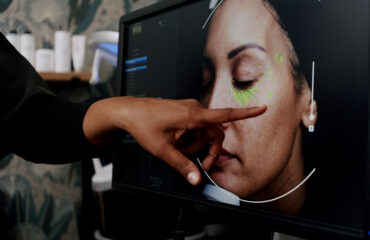
VISIA skin analysis quantifies seven parameters including UV damage, pigmentation, pores, wrinkles, texture, redness, and bacterial activity to create an objective baseline that informs targeted treatment decisions.
- VISIA captures both surface and subsurface skin concerns across seven distinct parameters
- UV damage analysis reveals sun exposure effects invisible to the naked eye, even under makeup
- Pore size, texture, and wrinkle measurements provide baseline data for tracking treatment progress
- Red area analysis identifies inflammation, rosacea, and vascular patterns affecting skin health
- Results are compared to age-matched databases to contextualise your skin’s condition objectively
VISIA skin analysis measures seven key parameters: UV spots (subsurface sun damage), brown spots (visible pigmentation), red areas (inflammation and vascular concerns), pores, wrinkles, texture irregularities, and porphyrins (bacterial activity). Each parameter provides objective data that guides personalised treatment planning beyond what visual assessment alone can detect.
When you look in the mirror, you see the surface of your skin. What you cannot see is the subsurface damage accumulating beneath, the bacterial activity in your pores, or the precise distribution of pigmentation across your face. This is where VISIA skin analysis transforms aesthetic treatment planning from educated guesswork into data-driven precision.
VISIA imaging technology captures your skin’s condition across seven distinct parameters, each revealing specific aspects of skin health that influence treatment decisions. For patients seeking post-summer skin correction in Cape Town, understanding what VISIA actually measures helps you interpret your results and make informed decisions about which treatments will address your specific concerns most effectively.
This guide explains each parameter VISIA measures, what happens during your scan, and why this objective data fundamentally changes treatment outcomes compared to visual assessment alone.
The Seven Parameters VISIA Measures (And What Each One Means for Your Skin)
UV Spots: The Hidden Sun Damage You Cannot See in the Mirror
UV photography reveals subsurface melanin deposits invisible to the naked eye. These represent sun damage that has not yet surfaced as visible pigmentation but will eventually appear as brown spots, freckles, or uneven skin tone if left untreated.
This parameter is particularly revealing for Cape Town patients after summer exposure. You might think your skin looks relatively clear, whilst the UV imaging shows significant subsurface damage. This early detection allows for preventative treatment before the damage becomes visible, making it one of VISIA’s most valuable measurements for long-term skin health.
Brown Spots and Pigmentation: Surface Discolouration and Melasma Patterns
Unlike UV spots, brown spots measure visible pigmentation on the skin’s surface. VISIA’s imaging isolates melanin concentrations, highlighting freckles, age spots, post-inflammatory hyperpigmentation, and melasma patterns with precision that exceeds what the human eye can distinguish.
The system maps the exact location, size, and intensity of each pigmented area, creating a baseline that allows practitioners to track which spots respond to treatment and which require different approaches. This specificity is essential for tailoring chemical peel formulations or laser parameters to your unique pigmentation pattern.
Red Areas: Inflammation, Rosacea, and Vascular Concerns
Red area analysis identifies haemoglobin concentrations, revealing inflammation, broken capillaries, rosacea, and general vascular reactivity. Many patients are surprised to discover inflammatory patterns they had not recognised as problematic.
This parameter helps differentiate between redness caused by surface inflammation (which responds well to certain treatments) and deeper vascular issues (which may require different approaches). For patients with rosacea or sensitive skin, this measurement guides treatment intensity and product selection to avoid exacerbating existing inflammation.
Pores: Size, Distribution, and Congestion Patterns
VISIA identifies and measures individual pores across your face, analysing size, distribution, and congestion levels. The system distinguishes between pores enlarged by oil production, those stretched by sun damage and collagen loss, and those temporarily enlarged by congestion.
This differentiation matters because treatment approaches vary significantly. Pores enlarged by sebum production respond to different interventions than those stretched by photoageing. Understanding your specific pore pattern informs whether you need oil-regulating treatments, collagen-stimulating procedures, or both.
Texture and Wrinkles: Surface Irregularities and Depth Measurement
Texture analysis measures surface irregularities, fine lines, and wrinkle depth with quantifiable precision. VISIA captures the topography of your skin, identifying areas of roughness, acne scarring, and lines that may not be apparent in standard lighting.
This parameter is particularly useful for tracking improvement after treatments like Dermapen microneedling or chemical peels. The before-and-after comparison provides objective evidence of textural improvement rather than relying on subjective assessment.
Porphyrins: Bacterial Activity and Acne-Related Concerns
Porphyrins are bacterial excretions that fluoresce under UV light, indicating areas of bacterial colonisation in pores. High porphyrin levels correlate with acne activity and can predict where breakouts are likely to occur.
For patients with acne-prone skin, this measurement identifies problem areas that may benefit from targeted antibacterial treatments or specific skincare ingredients. It also helps monitor whether your current skincare routine is effectively managing bacterial activity or whether adjustments are needed.
What Actually Happens During Your VISIA Scan
The Scanning Process: What to Expect in the Room
A VISIA scan takes approximately five to ten minutes from start to finish. You will be seated in front of the VISIA booth, which looks similar to a photography setup with a chin rest and forehead support to ensure consistent positioning.
The system captures images from three angles: front, left, and right. Each angle is photographed under different lighting conditions: standard white light, cross-polarised light (which eliminates surface reflection to reveal subsurface features), and UV light (which reveals porphyrins and subsurface pigmentation).
You must remove all makeup, skincare products, and jewellery before scanning. Even light foundation can interfere with accurate measurement. Your hair should be pulled back completely from your face. The room lighting is controlled to ensure consistent results across multiple scans.
Understanding Your VISIA Images and Report
Your VISIA report presents images of your face under different lighting conditions alongside numerical scores for each parameter. These scores are presented as percentiles, comparing your results to a database of individuals with similar age and skin type.
A percentile score shows how your skin compares to others in your demographic category. For example, a UV spot score in the 40th percentile means your subsurface sun damage is less than 60% of people your age and skin type, but more than 40%. Lower percentile scores indicate better performance in that parameter.
The visual images are colour-coded to highlight problem areas. Brown spots appear as distinct dark marks, red areas are highlighted in pink or red, pores are circled, and wrinkles are outlined. This visual representation makes it immediately clear where your primary concerns exist.
How Your Results Feed Into Treatment Planning
Your VISIA results inform every aspect of your treatment plan. A patient with high UV spot scores and significant subsurface damage might benefit from a series of chemical peels targeting pigmentation, whilst someone with elevated porphyrins and texture concerns might prioritise treatments addressing bacterial activity and collagen stimulation.
The data allows practitioners to sequence treatments logically. For instance, addressing inflammation before performing aggressive exfoliation, or treating bacterial activity before microneedling. This strategic approach, informed by objective measurements, typically produces superior outcomes compared to generic treatment protocols.
Follow-up scans track progress objectively. Rather than asking “Do you think your skin looks better?”, subsequent VISIA analyses quantify improvement in each parameter, confirming which treatments are working and where adjustments might be needed.
Why Objective Data Changes Treatment Outcomes
The Limitations of Visual Assessment Alone
Even experienced practitioners cannot see subsurface damage, accurately quantify pore size across different facial zones, or distinguish between types of redness without imaging technology. Visual assessment is inherently subjective and influenced by lighting conditions, makeup, and even the patient’s hydration level on a given day.
Research indicates that visual assessment typically identifies only 20-30% of the sun damage present in skin. The remaining damage exists beneath the surface, invisible until it eventually manifests as visible pigmentation or texture changes. By that point, the damage is more extensive and requires more aggressive intervention.
VISIA eliminates this guesswork. It provides consistent, repeatable measurements that do not vary based on who is looking at your skin or under what conditions. This consistency is essential for tracking genuine improvement over time.
Tracking Progress: Before and After Comparisons That Actually Mean Something
Subjective improvement is valuable, but objective data is irrefutable. When your VISIA scan shows a 35% reduction in brown spots after a series of chemical peels, you have quantifiable evidence of treatment efficacy.
This objective tracking serves multiple purposes. It confirms that your investment in treatment is producing measurable results. It helps identify when you have achieved optimal improvement in one parameter and can shift focus to other concerns. It also reveals when a particular treatment approach is not producing expected results, allowing for timely adjustments.
For patients, seeing numerical improvement provides motivation to maintain treatment protocols and skincare routines. The data makes progress tangible rather than relying on memory or subjective perception.
Personalising Treatment Based on Your Specific Damage Pattern
No two patients have identical VISIA results. Your unique combination of UV damage, pigmentation, redness, pore concerns, texture issues, and bacterial activity creates a personalised roadmap for treatment.
A patient with severe UV damage but minimal surface pigmentation requires a different approach than someone with significant brown spots but less subsurface damage. Similarly, someone with high porphyrin levels needs antibacterial intervention that would be unnecessary for a patient with low bacterial activity.
This personalisation extends to treatment intensity and product selection. VISIA data helps determine appropriate chemical peel strength, microneedling depth, and homecare product formulations based on your specific skin condition rather than generic protocols.
Understanding what VISIA skin analysis actually shows transforms your approach to aesthetic treatment from reactive to strategic. These seven parameters provide a comprehensive assessment of your skin’s current state and create a foundation for targeted, effective correction that addresses your specific concerns with precision.
—
Frequently Asked Questions
How long does a VISIA skin analysis take?
The actual scanning process takes five to ten minutes. Including consultation time to review your results and discuss findings, expect to spend approximately twenty to thirty minutes for a complete VISIA analysis appointment.
Does VISIA show damage that I cannot see with my own eyes?
Yes, particularly subsurface UV damage and porphyrins. VISIA’s UV photography reveals melanin deposits beneath the skin’s surface that have not yet become visible pigmentation, allowing for preventative treatment before damage surfaces.
What do the percentile scores on my VISIA report mean?
Percentile scores compare your results to a database of individuals with similar age and skin type. A score in the 30th percentile means your skin performs better than 70% of comparable individuals for that parameter. Lower percentiles indicate better skin quality.
Can I wear makeup during my VISIA scan?
No, you must arrive with completely clean skin or remove all makeup before scanning. Even light foundation interferes with accurate measurement. Skincare products, oils, and moisturisers should also be removed for optimal results.
How often should I have a VISIA analysis done?
Initial baseline scans are followed by progress scans typically every three to six months, depending on your treatment plan. This interval allows sufficient time for treatments to produce measurable changes whilst maintaining consistent tracking of your skin’s improvement.
Related Articles
- post-summer skin assessment
– Links to parent pillar article explaining the broader context of VISIA in seasonal skin correction strategy