A well-structured facial firming plan combines biostimulators and skin tightening treatments in a specific sequence, targeting different tissue layers over several months to achieve gradual, natural improvement in skin firmness.
- Biostimulators and skin tightening devices work on different tissue layers, which is why combining them can address facial laxity more fully than either treatment alone.
- The sequence and timing of treatments matters: starting with one modality before the other is often recommended to allow tissue response to settle before introducing additional stimulation.
- A personalised firming protocol is built around your skin’s current condition, degree of laxity, and how your tissue responds, not a fixed menu of treatments.
- Realistic timelines for a combined plan typically span several months, with gradual improvement continuing after each session rather than immediate visible change.
- Maintenance appointments are a planned part of the protocol, not an afterthought, and the frequency depends on which treatments were used and how your skin responds over time.
Combining biostimulators and skin tightening treatments involves sequencing energy-based devices and collagen-stimulating injectables in a planned order, with appropriate intervals between sessions. Each modality targets a different layer of the skin, and when timed correctly, the two approaches support each other to improve tissue quality and surface firmness over several months.
Most people approach facial firming as a single-treatment question: which one thing will make the biggest difference? The more useful question is how two distinct biological mechanisms can be sequenced to work in concert, each amplifying what the other starts. Combining biostimulators and skin tightening treatments is not simply about doing more. It is about doing things in the right order, at the right intervals, with a clear understanding of what is happening at a tissue level each time.
This article focuses specifically on how to build a practical firming plan using both modalities together. If you are still weighing whether either approach suits your skin, the full guide to what biostimulators and skin tightening realistically achieve covers the foundational biology and individual suitability in detail. What follows here goes deeper: sequencing logic, month-by-month timelines, assessment protocols, and the aftercare habits that determine whether your investment holds.
The distinction between the two modalities matters before anything else. Energy-based skin tightening devices work primarily by delivering controlled thermal or mechanical energy to the dermis and subdermal tissue, triggering an immediate contraction response and a longer-term remodelling cascade. Biostimulators, injected into the deep dermis or subcutaneous layer, work by stimulating your own fibroblasts to produce new collagen over weeks and months. One initiates a surface and structural contraction. The other rebuilds the scaffolding from within. When planned carefully, the two processes overlap in time and reinforce each other at a tissue level, which is precisely why the combined approach tends to produce more durable improvement than either treatment used alone.
Why Combining Two Modalities Makes Biological Sense
What Each Treatment Targets at a Tissue Level
Skin laxity rarely has a single cause. By the time you notice visible looseness, several things have typically changed: collagen density has reduced, elastin fibres have fragmented, the dermal matrix has thinned, and subcutaneous volume has shifted. No single treatment addresses all of these simultaneously, which is why a combined approach makes clinical sense rather than simply commercial sense.
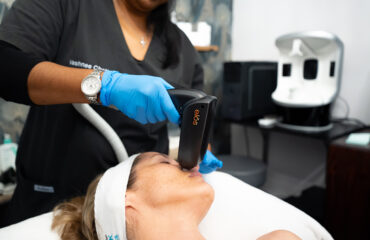
Energy-based skin tightening devices, whether radiofrequency or ultrasound-based, act primarily on the existing structural proteins in the dermis and the superficial muscular aponeurotic system layer. The controlled thermal injury they create causes collagen fibres to contract immediately, producing a modest but perceptible tightening effect within weeks. More importantly, this injury signal triggers a wound-healing response that stimulates new collagen synthesis over the following three to six months. The improvement is real, but it depends on the quality of the raw material already present in your tissue.
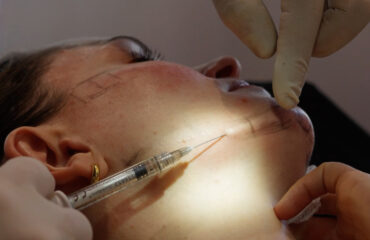
This is where biostimulators contribute something distinct. Rather than working on existing collagen, they recruit your fibroblasts to generate new collagen de novo. The collagen-stimulating particles, whether calcium hydroxylapatite microspheres or poly-L-lactic acid microparticles, act as a biological scaffold and signalling agent. Over time, as the carrier gel is absorbed, new collagen fills the treated area, improving tissue quality, density, and the mechanical support that underpins surface firmness. For a detailed explanation of how each biostimulator category works at a cellular level, the article on how collagen-stimulating treatments work covers the mechanisms specifically.
How the Two Approaches Support Each Other Over Time
The biological logic of combining these treatments becomes clearer when you map their timelines. Energy-based devices initiate a collagen remodelling signal relatively quickly. Biostimulators extend and deepen that remodelling process over a longer period. When sequenced correctly, the energy-based treatment primes the tissue environment, increasing cellular activity and blood flow, which may enhance the fibroblast response to a subsequently injected biostimulator. Conversely, a biostimulator given first can improve baseline tissue quality, giving the energy-based device better structural material to work with during a later session.
The result is not simply additive. Research in aesthetic medicine suggests that tissue with improved collagen density responds more robustly to energy-based treatments, and that the thermal stimulus from energy-based devices can potentiate the fibroblast recruitment triggered by biostimulators. In practice, this means patients who combine both modalities in a planned protocol often experience improvement that is qualitatively different from either treatment alone: firmer surface texture, improved skin tone, and a more sustained outcome over time.
How Do You Sequence Biostimulators and Skin Tightening Treatments Correctly?
Which Treatment Typically Comes First and Why
The sequencing question does not have a single universal answer, because the right order depends on your baseline tissue quality, the degree of laxity present, and the specific technologies being used. That said, there is a general clinical rationale that guides most combined protocols.
In most cases, energy-based skin tightening is performed first, particularly when moderate laxity and surface irregularity are the primary concerns. The device treatment stimulates an initial contraction and primes the tissue with an active remodelling signal. When a biostimulator is introduced into this primed environment, typically four to six weeks later, the tissue is already in an active regenerative state. The fibroblast recruitment triggered by the biostimulator may be more efficient in this context.
However, when the primary concern is volume-related laxity, where the skin appears loose partly because the underlying tissue has deflated rather than simply stretched, starting with a biostimulator can make more sense. Rebuilding tissue density first provides a better structural foundation, and the subsequent energy-based treatment then refines and tightens the surface over that improved base.
How Much Time Should You Leave Between Sessions?
Allowing adequate recovery between sessions is not simply about comfort. It is about giving each treatment enough time to initiate its biological response before introducing another stimulus. Overlapping treatments too closely can confuse the tissue’s healing response and reduce the effectiveness of both.
As a general guide, a minimum of four weeks between an energy-based treatment and a biostimulator injection is advisable, with six weeks being preferable in most cases. This interval allows the acute inflammatory phase of the device treatment to resolve and the early remodelling phase to begin, without waiting so long that the biological signal has quietened entirely. If you are repeating the same modality, the intervals are typically longer: energy-based treatments are often spaced six to twelve weeks apart, and biostimulators may be repeated at three to six monthly intervals depending on the product and your response.
Adjusting the Sequence When Your Skin Has Already Had Prior Treatment
If you have had previous biostimulator treatments or energy-based sessions elsewhere, the sequencing logic shifts. The tissue environment is already altered, and layering additional treatments requires a careful assessment of what is already present. Overcrowding the tissue with multiple stimuli without adequate intervals can lead to unpredictable outcomes, including prolonged inflammation or uneven response. An in-depth skin evaluation before beginning any combined protocol is essential in this context, not optional.
Building Your Facial Firming Timeline: What to Expect Month by Month
The Early Phase: Establishing a Foundation
The first two months of a combined firming plan are about establishing the conditions for improvement rather than seeing dramatic change. If your protocol begins with an energy-based treatment, you may notice a subtle tightening effect within the first two to four weeks as the initial collagen contraction takes hold. This early response is real but modest, and it is not representative of the final outcome.
During this phase, the most important thing happening is below the surface: the remodelling cascade is underway, fibroblast activity is elevated, and the tissue environment is being prepared. Introducing a biostimulator at the four-to-six-week mark, once the acute response has settled, adds the second layer of stimulus. You are not yet seeing the combined effect. You are building the foundation for it.
Skin texture may appear slightly uneven during this phase, particularly in the weeks immediately following treatment. This is a normal part of the remodelling process and typically settles as the tissue organises its response.
The Mid-Phase: Layering and Consolidating Improvement
Months three to six represent the period of most visible change in a well-structured combined protocol. The biostimulator’s collagen induction is reaching its peak activity, new collagen fibres are being laid down, and the surface improvements initiated by the energy-based treatment are consolidating. Most people notice a meaningful change in skin firmness, texture, and the way light falls across the face during this window.
This is also the phase where a second energy-based treatment session may be appropriate, depending on your initial response and the degree of laxity being addressed. Timing this second session at the three-to-four month mark, when the biostimulator’s collagen production is active, can reinforce the remodelling signal and deepen the overall improvement.
It is worth managing expectations clearly during this phase. The improvement is cumulative and gradual. If you are looking for a before-and-after comparison at the three-month mark, the change may appear subtle in photographs but feel more significant in person, particularly in how the skin moves and how surface texture has refined.
The Maintenance Phase: Protecting What You Have Built
By months six to twelve, a well-executed combined protocol should have produced its primary improvement. The maintenance phase is about protecting and extending that outcome rather than starting again from scratch. Biostimulators may be repeated annually or as directed by your practitioner based on your skin’s response. Energy-based treatments may be repeated at six-to-twelve monthly intervals to sustain the remodelling signal.
The maintenance phase is also when lifestyle and skincare habits become proportionally more important. The tissue quality you have built is not permanent by default. Without ongoing support through appropriate skincare, sun protection, and lifestyle choices, the rate of natural collagen degradation will gradually erode the improvement. Maintenance sessions extend the investment but cannot fully compensate for habits that accelerate collagen loss.
What Does a Facial Firming Assessment Look Like Before a Combined Plan Begins?
Mapping Tissue Quality and Laxity Before Choosing Treatments
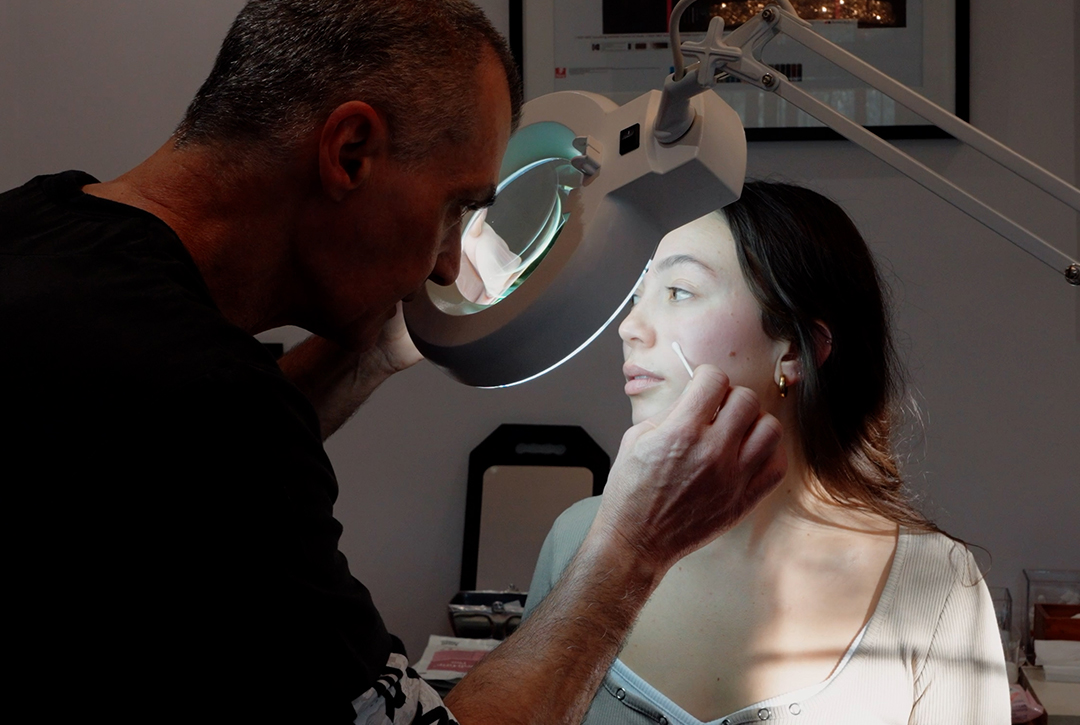
A combined firming plan should never begin with a treatment. It should begin with a careful evaluation of your tissue quality, the pattern and degree of laxity, the depth at which changes are occurring, and any contraindications that might affect sequencing or safety. This is not a formality. The information gathered during assessment directly determines which modality comes first, what intervals are appropriate, and what realistic improvement looks like for your specific anatomy.
At Dr Alek Nikolic’s practice, this assessment includes a detailed clinical evaluation of facial tissue at rest and in motion, an assessment of skin thickness and elasticity, and an evaluation of the underlying structural changes contributing to laxity. Ultrasound technology is used where relevant, not only for vascular mapping before injection but as a diagnostic tool to assess tissue depth and quality. This level of structural understanding is what allows the treatment sequence to be genuinely personalised rather than protocol-driven.
How VISIA Skin Analysis Informs Treatment Selection and Sequencing
VISIA skin analysis adds an objective, measurable layer to the clinical assessment. The system captures detailed imaging of surface and subsurface skin characteristics, including texture, pore quality, pigmentation, UV damage, and vascularity. In the context of a firming plan, this information is valuable in two ways.
First, it helps identify whether surface concerns such as texture irregularity or pigmentation are present alongside structural laxity, which may influence the order of treatments or the addition of supporting modalities. Second, it provides a baseline image set against which progress can be measured at subsequent appointments. Subjective impressions of improvement are useful, but objective imaging data allows both you and your practitioner to assess what has genuinely changed and where further attention may be warranted.
Tracking Progress Across Your Firming Journey
Progress tracking in a combined protocol is not a single endpoint comparison. It is an ongoing process that informs decisions at each stage. A follow-up VISIA assessment at three to four months, for example, can reveal changes in collagen density and surface quality that are not yet fully visible to the naked eye, and this information guides whether the second treatment phase should proceed as planned or be adjusted.
This tracking approach also gives you a clearer understanding of your own skin’s response pattern, which becomes increasingly valuable for planning future maintenance. Some skin responds rapidly and robustly to biostimulators; other skin requires more sessions to achieve the same degree of improvement. Knowing your response pattern means that subsequent protocols can be designed more efficiently.
Aftercare, Skin Health Maintenance, and Getting the Most from Your Firming Plan
What to Do and Avoid in the Days After Each Treatment
The days immediately following each treatment are a period of active biological change, and what you do during this window can meaningfully influence the outcome. After an energy-based skin tightening session, the tissue is in an acute inflammatory phase. Avoiding heat exposure, including hot showers, saunas, and intense exercise, for 24 to 48 hours helps prevent excessive inflammation that could interfere with the controlled remodelling response. Sun exposure should be avoided entirely during this period, and a broad-spectrum SPF applied consistently thereafter.
After a biostimulator injection, the aftercare priorities shift slightly. Gentle massage of the treated area may be recommended depending on the specific product used, as this helps distribute the material evenly and optimises the tissue response. Avoiding strenuous exercise and significant heat for 24 hours is generally advisable. Any swelling or firmness at the injection sites typically resolves within days and is part of the normal post-treatment response.
Skincare That Supports Collagen Stimulation Between Appointments
Your skincare routine between appointments is not passive. The right products actively support the collagen synthesis that your treatments have initiated, whilst the wrong ones can impede it. Vitamin C, applied topically in a stable formulation, supports collagen production and provides antioxidant protection against the UV-driven collagen degradation that is particularly significant in Cape Town’s climate. Retinoids, used consistently and at an appropriate concentration for your skin, stimulate fibroblast activity and improve dermal thickness over time.
Peptide-containing serums can provide additional signalling support for collagen synthesis, and a well-formulated moisturiser that maintains skin barrier integrity ensures that the surface environment is conducive to remodelling. Vashnee, the practice’s skincare therapist, can guide you through a supporting skincare protocol that is matched to your treatment plan and skin type, rather than a generic product selection.
How Lifestyle Factors in Cape Town Affect Your Firming Plan
Cape Town’s environment presents specific challenges for anyone investing in a firming protocol. UV radiation is intense year-round, and UV exposure is one of the primary drivers of collagen degradation. Consistent, daily SPF use is not optional in this context. It is the single most important lifestyle habit for protecting the collagen your treatments are generating.
Beyond UV, factors including smoking, disrupted sleep, high glycaemic diets, and chronic stress all accelerate the rate of collagen breakdown through mechanisms involving oxidative stress and inflammatory signalling. None of these factors can be fully offset by treatment. A firming plan that includes strong lifestyle support will produce more durable improvement than the same plan without it.
Altitude and wind exposure, relevant for those who spend time outdoors in the Cape’s varied terrain, can also affect skin barrier function and hydration levels, both of which influence how efficiently your skin responds to collagen-stimulating treatments. Keeping skin well-hydrated and barrier-intact between sessions is a practical step that supports the broader plan.
Frequently Asked Questions
Can biostimulators and skin tightening treatments be done on the same day?
Combining biostimulators and skin tightening on the same day is generally not recommended. Each treatment triggers an inflammatory and remodelling response, and overlapping these responses simultaneously makes it difficult to assess how the tissue is reacting to each modality. A minimum interval of four to six weeks between treatments allows each to initiate its biological process without interference.
How many sessions of each treatment will I need in a combined firming plan?
This depends on your baseline tissue quality, the degree of laxity, and your skin’s individual response. A typical starting point might involve one to two energy-based sessions and two to three biostimulator sessions across a six-to-twelve month period, but your practitioner will adjust this based on your assessment and how your skin responds at each stage.
Is it safe to combine biostimulators with energy-based skin tightening?
Yes, when planned and sequenced appropriately by a qualified practitioner, combining these modalities is considered safe. The key is adequate spacing between sessions, a careful pre-treatment assessment to identify any contraindications, and monitoring of your tissue response throughout the protocol.
How long before I see improvement from a combined biostimulator and skin tightening plan?
Early changes may be visible within four to eight weeks of the first treatment, but the most meaningful improvement typically becomes apparent at the three-to-six month mark, when both the energy-based remodelling and biostimulator-induced collagen synthesis are at peak activity. Full outcomes are generally assessed at six to twelve months.
What happens if I only do one type of treatment instead of combining them?
Either modality used alone can produce genuine improvement, but the outcome is likely to be more limited in scope and duration. Energy-based treatments improve surface tightening but do not rebuild collagen density in the same way biostimulators do. Biostimulators improve tissue quality and volume support but do not produce the immediate contraction response of energy-based devices. Combining both addresses a wider range of tissue changes and typically produces more sustained improvement.
—
Building a Plan That Works for Your Skin
A combined firming protocol is not a shortcut to faster results. It is a more complete answer to a multi-layered problem. Skin laxity involves changes at the surface, within the dermis, and in the deeper supporting structures, and addressing all of these requires more than one biological mechanism.
What makes the difference between a plan that works and one that disappoints is not the number of treatments, but the quality of the assessment that precedes them. Understanding your tissue at a structural level, choosing the right sequence for your specific pattern of laxity, spacing sessions to allow each treatment to do its work, and supporting the process with appropriate skincare and lifestyle habits: these are the variables that determine the outcome.
If you are considering a combined approach and want to understand what a personalised protocol might look like for your skin, the starting point is a full assessment rather than a treatment decision. Dr Alek Nikolic’s practice in Cape Town offers in-depth consultations that include VISIA skin analysis and, where relevant, ultrasound-guided tissue assessment, giving you an accurate picture of your skin before any treatment is planned. That foundation is what allows a firming plan to be genuinely tailored rather than simply applied.
Related Articles
- what biostimulators and skin tightening can realistically achieve
– Parent pillar provides foundational context on each modality individually; linking here helps readers understand the basis before exploring how the two are combined. - how biostimulators stimulate collagen production
– Sibling article provides in-depth explanation of biostimulator mechanisms; linking here avoids duplicating that content whilst directing readers who want a deeper understanding of the injectable component of their plan.