Biostimulators and non-surgical skin tightening treatments can meaningfully improve facial firmness and skin quality in mild to moderate laxity, but they work gradually and require realistic expectations, careful patient selection, and a personalised protocol rather than a one-size-fits-all approach.
- Biostimulators work by stimulating your body’s own collagen production, which means improvement builds gradually over several months rather than appearing immediately.
- Non-surgical skin tightening technologies such as radiofrequency deliver controlled energy to deeper tissue layers to encourage collagen remodelling, with no surgical downtime.
- These treatments are most effective for mild to moderate skin laxity; significant structural looseness may require a surgical referral for appropriate correction.
- No single treatment reverses all aspects of facial ageing; most people benefit from a personalised protocol that combines two or more complementary approaches.
- A full assessment, including skin evaluation and discussion of your anatomy and goals, is essential before any firming treatment is selected or started.
Biostimulators and non-surgical skin tightening treatments improve facial firmness by stimulating collagen production and remodelling soft tissue. They work gradually over months rather than immediately, and are best suited to mild to moderate skin laxity. Realistic expectations and a careful assessment are essential before starting any protocol.
You notice it gradually. The jawline that once felt defined starts to soften. The skin along your cheeks sits slightly differently than it did a few years ago. Nothing dramatic, but enough to make you pause in the mirror and wonder what, realistically, can be done about it. Facial firming has become one of the most searched topics in aesthetic medicine, and with good reason: the options available today are genuinely different from what existed a decade ago. Biostimulators and non-surgical skin tightening technologies have both matured significantly, and understanding what they can and cannot achieve is the most useful thing you can know before booking any appointment.
This article explains the biology of facial laxity, how biostimulators and energy-based skin tightening devices work, what realistic improvement looks like across different degrees of laxity, and how a diagnostic-first approach shapes every decision made at Dr Alek Nikolic’s Cape Town practice.
What biostimulators and skin tightening treatments can do: Biostimulators and non-surgical skin tightening treatments improve facial firmness by stimulating collagen production and remodelling soft tissue. They work gradually over months rather than immediately, and are best suited to mild to moderate skin laxity. Realistic expectations and a careful assessment are essential before starting any protocol.
Key points to carry into the rest of this article:
- Biostimulators work by stimulating your body’s own collagen production, so improvement builds gradually over months.
- Non-surgical skin tightening technologies such as radiofrequency deliver controlled energy to deeper tissue layers to encourage collagen remodelling, with no surgical downtime.
- These treatments are most effective for mild to moderate skin laxity; significant structural looseness may require a surgical referral.
- No single treatment addresses all aspects of facial ageing; most people benefit from a personalised protocol combining two or more complementary approaches.
- A full assessment, including skin evaluation and discussion of your anatomy and goals, is essential before any firming treatment is selected.
Why skin loses firmness: the biology behind facial laxity
Collagen, elastin, and the scaffolding that keeps skin taut
Skin firmness depends on a structural scaffolding made primarily of collagen and elastin fibres within the dermis. Collagen provides tensile strength, giving skin its resistance to stretching and its ability to hold shape. Elastin provides recoil, allowing skin to spring back after movement. Together, they maintain the taut, resilient quality associated with younger skin.
From your mid-twenties onwards, collagen production begins to decline gradually. Elastin fibres become less organised and less effective at recoil. The dermis thins over time, and the skin’s surface loses the support it once had from below. Sun exposure accelerates this process considerably, which is why people who have spent years in Cape Town’s high-UV environment often notice laxity earlier than their genetics alone would predict. Smoking, oxidative stress, and disrupted sleep also contribute to the breakdown of dermal architecture.
The result is skin that looks and feels less firm, with a subtle heaviness or softening that cannot be corrected by skincare alone. Topical products can support skin health and slow further decline, but they cannot rebuild the structural scaffolding that has already been lost.
How volume loss and bone remodelling contribute to laxity
Skin laxity is rarely a skin-only problem. The face ages in three dimensions, and changes in the deeper structures beneath the skin contribute significantly to the appearance of looseness.
Facial fat compartments, which sit in distinct pockets beneath the skin, reduce in volume with age. Some compartments deflate, whilst others shift position due to ligament loosening. This redistribution creates hollowing in some areas and apparent heaviness in others. The nasolabial folds deepen not only because skin has loosened, but because the fat that once supported the cheek above them has diminished.
Beneath the fat, the facial bones themselves remodel over time. Research indicates that the orbital rim widens, the midface skeleton recedes, and the jawbone loses density and projection. This skeletal change reduces the structural foundation on which all overlying soft tissue rests. The result is skin that has not simply become lax in isolation, but which now has less architecture beneath it to stay taut against. Any firming protocol that ignores these deeper contributors will be limited in what it can achieve.
What are biostimulators and how do they work?
Categories of biostimulator available in South Africa
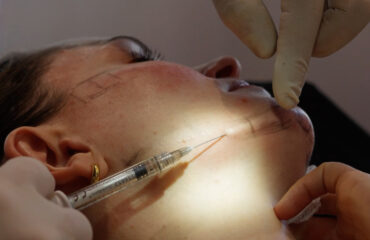
Biostimulators are injectable substances that work not by adding volume directly, but by triggering your body’s own biological repair processes. The primary goal is to stimulate fibroblasts, the cells responsible for producing collagen and elastin, to increase their activity and output.
Several categories of biostimulator are available through registered aesthetic medicine practitioners in South Africa. Calcium hydroxylapatite-based products consist of microspheres suspended in a gel carrier. Once injected, the carrier provides immediate lift whilst the microspheres stimulate a collagen-forming response over the following months. Poly-L-lactic acid works similarly, with fine particles that gradually dissolve whilst prompting sustained collagen production over an extended period. Polynucleotide-based treatments, derived from purified DNA fragments, support tissue repair and stimulate fibroblast activity through a different biological pathway, and are particularly useful for improving skin quality and hydration alongside firmness.
Each category has different injection techniques, treatment depths, and ideal use cases. The choice depends on your anatomy, the degree of laxity present, and the specific areas being addressed.
What collagen stimulation actually looks like over time
This is where many people are surprised. Biostimulators do not produce the kind of immediate visual change associated with hyaluronic acid-based dermal fillers. The collagen response they trigger is a biological process, and biology takes time.
In the weeks following a biostimulator treatment, your body begins building new collagen around the injected material. You may notice subtle changes in skin texture and firmness as early as four to six weeks, but the full response typically continues developing over several months. This gradual trajectory is not a limitation; it is part of what makes the improvement look natural rather than sudden. The skin firms from within, and the change tends to be noticed by others as looking well rather than looking different. Maintaining results usually requires periodic repeat treatments, as the collagen produced will eventually turn over with normal skin ageing.
Non-surgical skin tightening technologies: how radiofrequency and energy-based devices work
How radiofrequency energy remodels tissue
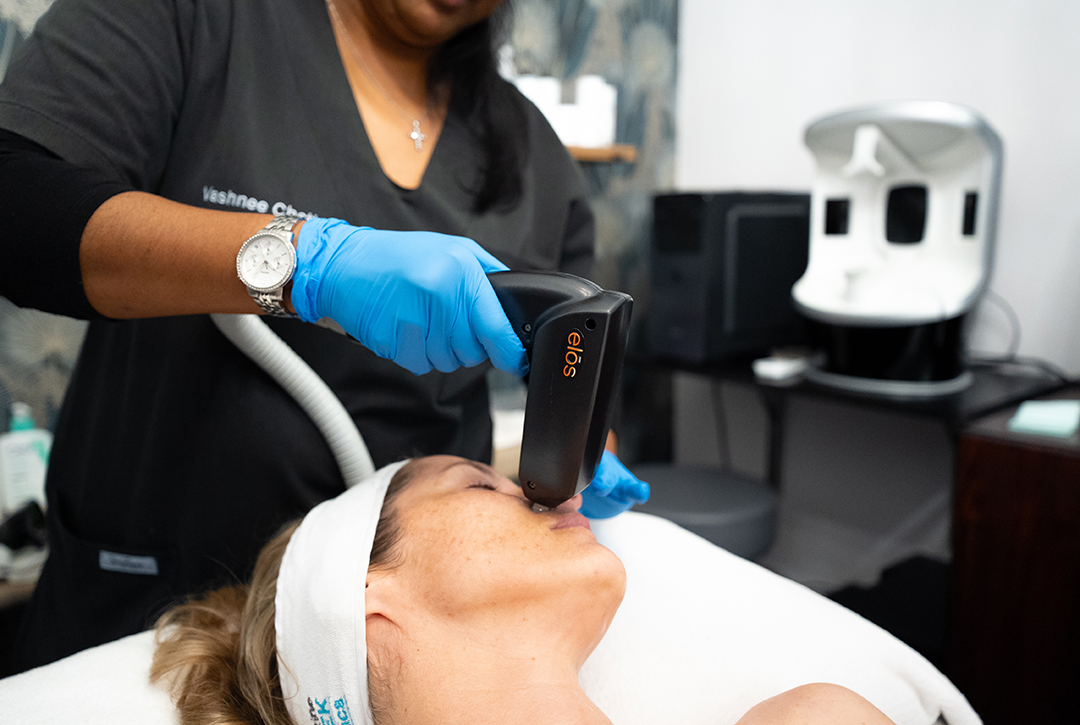
Radiofrequency skin tightening works on a fundamentally different principle to biostimulators. Rather than introducing a substance into the skin, radiofrequency devices deliver controlled electrical energy that generates heat within the tissue. This thermal effect targets the deeper layers of the skin and the superficial muscular aponeurotic system beneath it.
When collagen fibres are heated to specific temperatures, two things happen. First, existing collagen fibres contract, producing an immediate tightening effect that you may notice directly after treatment. Second, the controlled thermal injury stimulates a wound-healing response, prompting fibroblasts to produce new collagen over the following weeks and months. This dual mechanism, immediate contraction and delayed neogenesis, is what distinguishes radiofrequency from purely topical approaches.
Different radiofrequency platforms deliver energy in different ways: monopolar, bipolar, and multipolar configurations each have distinct depth profiles and tissue effects. Some devices combine radiofrequency with microneedling to deliver energy directly into the dermis at precise depths, bypassing the surface of the skin entirely. The choice of device and settings depends on the area being treated and the degree of laxity present.
What to expect from a radiofrequency skin tightening session
A radiofrequency session is generally well tolerated. Most people describe a warming or prickling sensation during treatment, with intensity varying depending on the device and the energy settings used. Topical anaesthetic cream is typically applied beforehand to improve comfort.
Immediately afterwards, you may notice some redness and mild swelling, both of which usually resolve within a few days. The immediate tightening from collagen contraction may be visible, though this is often subtle. The more significant improvement from new collagen formation develops gradually over the following two to three months.
Most practitioners recommend a course of sessions rather than a single treatment, with the number depending on your skin’s degree of laxity and your individual response. Maintenance sessions are typically scheduled at intervals afterwards to sustain the remodelling response. There is no surgical downtime, though your practitioner will give specific aftercare guidance about sun protection and skincare in the days following each session.
Biostimulators versus skin tightening devices: which approach suits your skin?
Biostimulators and radiofrequency skin tightening are not competing treatments; they address overlapping but distinct aspects of facial laxity. Choosing between them, or combining them, depends on a careful reading of your skin’s current state, your anatomy, and your goals.
Biostimulators are particularly well suited when the primary concern is skin quality alongside firmness: when the skin feels thin, crepey, or has lost the density it once had. They work within the tissue itself, rebuilding the structural matrix from the inside. They also provide some degree of volume correction in areas where fat loss has contributed to the appearance of laxity, though they are not a substitute for dermal fillers when significant volume restoration is the goal.
Radiofrequency skin tightening tends to be the stronger choice when the concern is tissue descent or looseness rather than skin quality alone. The thermal effect on deeper structures can address mild to moderate tissue laxity in the lower face, jawline, and neck in ways that injectable treatments cannot reach as effectively.
When combining both approaches makes clinical sense
For many people, the most effective firming protocol uses both modalities together, sequenced appropriately. Radiofrequency can improve tissue position and stimulate collagen in the deeper layers, whilst a biostimulator works within the dermis to improve skin quality and density. The combination addresses laxity at multiple tissue depths simultaneously.
Combining treatments requires careful planning. The timing and sequencing of injections relative to energy-based treatments matters, as does the anatomical relationship between injection sites and areas of radiofrequency application. This is one of the reasons that a detailed assessment, rather than a menu-driven approach, produces better outcomes. Your anatomy, previous treatments, and current tissue state all influence the sequence and spacing of a combined protocol.
Realistic expectations: what these treatments can and cannot achieve
The difference between mild, moderate, and significant laxity
Honest expectation-setting is one of the most important things a practitioner can offer. Non-surgical firming treatments work within a defined range of laxity, and understanding where your skin sits within that range determines what is realistically achievable.
Mild laxity typically describes skin that has begun to soften and lose some elasticity, but where the underlying tissue position is largely maintained. People in this group often respond well to biostimulators and radiofrequency, and can achieve meaningful improvement in firmness and skin quality.
Moderate laxity involves more visible tissue descent, often with jowling beginning to form, softening of the jawline definition, or looseness in the neck. Non-surgical treatments can still produce noticeable improvement here, but the degree of correction is more limited and results require ongoing maintenance.
Significant laxity, where there is marked tissue descent, deep jowling, or substantial skin excess, is generally beyond what non-surgical treatments can meaningfully correct. Attempting to treat significant laxity with biostimulators or radiofrequency alone risks disappointing outcomes and unnecessary investment.
When a surgical referral is the more appropriate path
Part of practising ethical aesthetic medicine is recognising when a non-surgical approach is not the right tool for the job. If your assessment reveals significant structural laxity that falls outside the range of what energy-based and injectable firming treatments can address, an honest conversation about surgical options is more valuable than proceeding with treatments unlikely to meet your goals.
Dr Alek’s practice is built on this principle: a careful assessment determines what is appropriate, and a surgical referral is offered when it represents the better path. This is not a failure of non-surgical medicine; it is the diagnostic-first approach working as it should.
How Dr Alek Nikolic approaches facial firming assessment in Cape Town
The role of VISIA skin analysis and ultrasound in planning a firming protocol
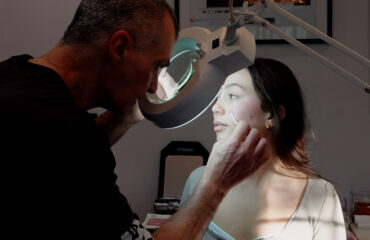
Before any firming treatment is recommended, a full assessment of your skin, anatomy, and goals is conducted. This is not a formality; it is the foundation on which every decision rests.
VISIA skin analysis provides a detailed, objective picture of your skin’s current state, capturing information about surface texture, pore structure, pigmentation, and subsurface changes that are not visible to the naked eye. This allows Dr Alek to understand not only what you can see in the mirror, but what is happening within the tissue layers that will be targeted by treatment. Tracking these images over time also allows both of you to see how your skin responds and evolves across a protocol.
Ultrasound technology adds another dimension to the assessment. Diagnostic ultrasound allows visualisation of tissue layers, fat compartment depth, and the position of underlying structures. This is particularly valuable when planning biostimulator injections, as it informs both the depth and placement of treatment with a level of precision that surface assessment alone cannot provide. Ultrasound also plays a role in complication management should any concern arise after treatment.
Dr Alek serves as an Allergan Local Country Mentor in Facial Aesthetics and has lectured internationally on injection technique and facial anatomy. This clinical background informs how assessments are structured and how protocols are designed. The team, including Dr Lynelle Hoeks, skincare therapist Vashnee Chetty, and practice coordinator Sam, supports the full patient journey from initial enquiry through to ongoing skin health maintenance.
Maintaining your results: what comes after a firming treatment
Firming treatments are not a single event with permanent outcomes. They are part of an ongoing approach to skin health maintenance, and what you do between and after treatments influences how long your improvement lasts.
Sun protection is the single most important factor in preserving the collagen your treatments have stimulated. UV exposure is the primary environmental driver of collagen breakdown, and without consistent broad-spectrum sun protection, new collagen will degrade more rapidly. In Cape Town’s high-UV environment, this is not an optional afterthought; it is a clinical necessity.
A well-designed home skincare routine supports your treatment outcomes between sessions. Ingredients that support collagen synthesis and skin barrier function, used consistently, help maintain the tissue quality that your protocol has worked to build. Vashnee Chetty, the practice’s skincare therapist, guides patients on appropriate home care that complements their in-clinic treatments rather than working against them.
Maintenance sessions, scheduled at intervals determined by the specific treatments you have had and your individual response, are part of a realistic long-term plan. Collagen produced by biostimulators will gradually turn over as part of normal skin biology, and the remodelling effect of radiofrequency will diminish without periodic reinforcement. Thinking of facial firming as a maintenance programme rather than a one-time fix produces more consistent, satisfying outcomes over time.
Frequently asked questions about facial firming treatments
How long does it take to see improvement from a biostimulator treatment?
Biostimulators work by triggering your body’s own collagen production, which is a gradual biological process. Most people begin to notice improvement between six and twelve weeks after treatment, with the full response often continuing to develop over several months. A single session may be sufficient for some, whilst others benefit from a short course of treatments spaced over time.
Are biostimulator treatments painful?
Comfort levels vary depending on the specific biostimulator used, the area being treated, and your individual sensitivity. Most treatments involve some degree of injection discomfort, which practitioners minimise using topical anaesthetic cream or dilution with local anaesthetic. The sensation is generally described as a brief stinging or pressure rather than significant pain.
Is radiofrequency skin tightening safe for all skin tones?
Radiofrequency technology delivers energy as heat to deeper tissue layers rather than targeting surface pigment, which makes it generally suitable across a wider range of skin tones compared to some light-based devices. That said, a careful assessment of your skin, medical history, and treatment goals is always required before any energy-based treatment is recommended.
How many radiofrequency sessions will I need to see a difference?
The number of sessions depends on your degree of skin laxity, the device being used, and your individual response to treatment. Practitioners commonly recommend a course of sessions rather than a single treatment, with maintenance sessions scheduled afterwards to support ongoing collagen remodelling. Your assessment appointment is the appropriate time to discuss a realistic session plan.
Can biostimulators replace dermal fillers for facial firming?
Biostimulators and dermal fillers serve different purposes and are not interchangeable. Biostimulators stimulate collagen production to improve skin quality and firmness over time, whilst hyaluronic acid-based dermal fillers restore volume and contour more immediately. Many people benefit from both as part of a personalised protocol, but the right combination depends on your specific anatomy and goals.
What is the difference between a biostimulator and a skin booster?
Skin boosters, also described as bio-remodelling treatments, primarily hydrate and improve skin quality by stimulating the skin’s natural repair processes. Biostimulators are designed specifically to trigger collagen and sometimes elastin production to improve structural firmness. There is some overlap in mechanism, but the primary clinical goals differ, which is why assessment is needed to determine which is appropriate for your skin.
How do I know if my skin laxity is mild, moderate, or significant?
Assessing the degree of skin laxity requires a clinical evaluation of skin elasticity, tissue quality, facial anatomy, and the position of underlying structures. This cannot be accurately determined from photographs alone. A face-to-face assessment with a trained aesthetic medicine practitioner, ideally supported by imaging tools, gives you an honest picture of what non-surgical treatment can realistically achieve for your skin.
Can I have a biostimulator treatment if I have had dermal fillers before?
In most cases, yes, but the timing and placement require careful consideration. A practitioner with knowledge of your previous treatments and current facial anatomy will assess whether existing filler material, its location, and its volume are compatible with the planned biostimulator injection sites. This is one of the reasons a detailed consultation history matters before any new treatment.
Is there any downtime after skin tightening or biostimulator treatments?
Most non-surgical firming treatments involve minimal downtime compared to surgical options, but some temporary effects are common. These can include redness, mild swelling, or tenderness at injection sites or treated areas, typically resolving within a few days. Your practitioner will give you specific aftercare guidance based on the treatment you have had.
At what age should I consider a facial firming treatment?
There is no fixed age at which firming treatments become appropriate, because skin laxity develops at different rates depending on genetics, sun exposure, lifestyle, and other factors. Some people in their late twenties benefit from early collagen stimulation as a preventative measure, whilst others in their fifties are excellent candidates for more targeted intervention. The right time is determined by your skin’s current state, not your age.
If you are considering a facial firming treatment and want to understand what is genuinely achievable for your skin, the starting point is always a proper assessment. Contact the practice to arrange a consultation with Dr Alek Nikolic in Cape Town, where your skin, anatomy, and goals will be evaluated before any protocol is discussed.
Related Articles
- Biostimulators Explained: How Collagen Stimulating Treatments Work
– Related cluster article - Combining Biostimulators and Skin Tightening: Building a Facial Firming Plan
– Related cluster article