
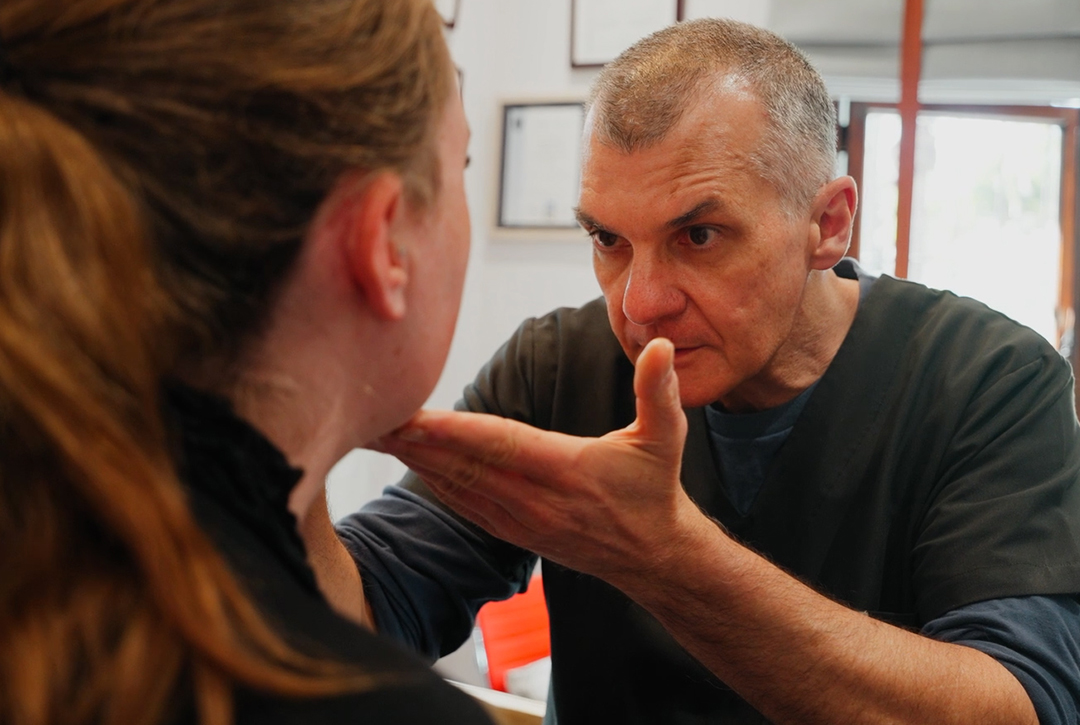
Botulinum toxin softens an angular or asymmetrical jawline by reducing masseter muscle bulk over several weeks, with outcomes that are gradual, natural-looking, and tailored to your individual facial anatomy.
- An overactive or asymmetrically developed masseter muscle is one of the most common causes of a wide or uneven jawline.
- Botulinum toxin injected into the masseter gradually reduces muscle bulk, softening the jaw contour without surgery.
- Facial asymmetry from uneven muscle activity can be addressed by injecting different doses on each side to encourage better balance.
- Most people notice visible softening from eight weeks onwards, with the full outcome apparent at around three months.
- A careful assessment, including palpation and sometimes ultrasound-guided measurement, is essential before any treatment to ensure the right dose and placement.
Botulinum toxin softens the jawline by relaxing the masseter muscles, which sit at the angle of the jaw. When these muscles are overactive or uneven in size, they create a wide, square, or asymmetrical lower face. Carefully placed injections reduce muscle bulk gradually, producing a softer, more balanced jaw contour over eight to twelve weeks.
Your jaw does more work than almost any other structure in your face. It chews, clenches, grinds, and braces against stress, often without you noticing. Over time, that workload leaves a visible mark: a wider, squarer lower face, or a jaw that looks noticeably different from one side to the other. Botulinum toxin offers a way to address both concerns, not by freezing the jaw into stillness, but by gradually reducing the bulk of an overworked muscle.
This article focuses specifically on what happens when botulinum toxin is used for jawline softening and facial asymmetry correction. If you are new to the idea of using botulinum toxin beyond the upper face, the broader context sits within lower face lift, balance, and contouring using botulinum toxin, which covers the underlying principles of muscle balance and facial harmony. Here, the focus goes deeper: the anatomy of the masseter, how asymmetry develops, what a proper assessment involves, and what you can realistically expect from treatment and beyond.
One thing worth establishing early is that jaw contouring with botulinum toxin is not a cosmetic shortcut. It is a medically informed intervention that works best when it begins with a careful understanding of why your jaw looks the way it does. Not every wide or uneven jaw has the same cause, and not every cause responds to the same approach. Getting that distinction right is what separates a well-considered outcome from a disappointing one.
The questions most people bring to their first consultation tend to be practical: Will it hurt? How long will it last? Will I still be able to chew normally? Those questions are answered in detail throughout this article. But they sit within a larger framework: understanding your jaw anatomy, identifying what is driving your concern, and deciding whether botulinum toxin is the right tool, either on its own or alongside other treatments.
Whether you are bothered by a jaw that feels too square, a face that looks uneven in photographs, or a jaw that aches from habitual clenching, the starting point is the same. Careful assessment before any intervention. That is the principle that guides every treatment decision at Dr Alek Nikolic’s practice, and it is the principle that makes the difference between a result that looks natural and one that simply looks done.
—
What actually causes an angular or asymmetrical jawline?
The role of the masseter muscle in jaw shape
The masseter is a powerful, roughly rectangular muscle that runs from the cheekbone down to the lower jaw on each side of your face. Its primary function is mastication, the mechanical work of chewing. In most people it sits quietly beneath the skin without drawing attention. In others, it becomes visibly prominent, creating a wide, square, or heavy appearance at the angle of the jaw.
Masseter hypertrophy, the medical term for an enlarged masseter, develops when the muscle is repeatedly overloaded. Habitual teeth grinding (bruxism), jaw clenching during sleep or stress, and a diet high in tough foods all contribute. The muscle responds to that repeated demand the same way any muscle responds to regular training: it grows. The difference is that unlike a bicep, you probably do not want a larger masseter, and most people do not realise it is happening until the change in their face shape becomes noticeable.
Masseter hypertrophy is also more common than many people assume. Research suggests it is frequently associated with bruxism, which itself is linked to sleep disturbance and psychological stress. This means the same patients who notice their jaw widening over time are often also experiencing jaw pain, tooth wear, headaches, and disrupted sleep. The cosmetic concern and the functional concern share the same root cause.
Why one side of the jaw can look different from the other
Facial asymmetry involving the jaw is rarely random. In most cases, it reflects a difference in how the two masseters are being used. If you habitually chew on one side, clench more strongly on one side, or have a dental issue that shifts your bite, one masseter will develop more bulk than the other. That size difference translates directly into visible asymmetry: one side of the lower face appears wider, heavier, or more angular than the other.
Asymmetry can also be amplified by postural habits. Resting your jaw on one hand, sleeping consistently on one side, or carrying tension asymmetrically through the neck and jaw are all contributing factors. In practice, most people have some degree of natural asymmetry, but when the masseters are significantly different in size, that asymmetry becomes more pronounced and more difficult to ignore.
When is jaw asymmetry a dental or skeletal issue rather than a muscle issue?
This is a critical distinction that any careful assessment must address before treatment begins. Not all jaw asymmetry originates in the masseter. Skeletal asymmetry, where the underlying bone structure is uneven, produces a different kind of facial imbalance that botulinum toxin cannot correct. Dental issues including malocclusion, missing teeth, or an uneven bite can also create the appearance of jaw asymmetry, and in these cases treating the muscle without addressing the bite will produce incomplete outcomes at best.
A practitioner with a diagnostic-first methodology will look for signs of skeletal or dental contribution during assessment and refer you to the appropriate specialist before proceeding with any injectable treatment.
—
How does botulinum toxin actually soften the jawline?
The mechanism: from injection to muscle reduction
Botulinum toxin works by temporarily blocking the nerve signals that tell a muscle to contract. When injected into the masseter, it does not immediately change the shape of your jaw. What it does is reduce the functional activity of the muscle over the following weeks. With less repeated contraction, the muscle gradually reduces in bulk, a process called disuse atrophy. The visible softening of your jawline follows from that reduction in muscle volume.
This is meaningfully different from how botulinum toxin works in the upper face. When treating frown lines or forehead creases, the primary goal is to reduce movement and prevent the skin from folding repeatedly. In the masseter, the goal is volumetric reduction of the muscle itself. That is why the doses used for jaw contouring are considerably higher than those used for expression lines, and why the timeline for visible change is longer.
What changes you can realistically expect, and when
Most people begin to notice some softening of the jawline between four and six weeks after treatment. The full response, where muscle bulk has reduced to its lowest point, typically develops over eight to twelve weeks. This gradual timeline is not a flaw in the treatment; it reflects the biological process of muscle atrophy, which cannot be rushed.
What you will notice is a progressive softening of the angle of the jaw, a reduction in the squared-off appearance of the lower face, and, where asymmetry was the concern, a gradual evening-out of the two sides. You will still be able to chew normally throughout this process. The masseter is a large and powerful muscle, and reducing its bulk does not impair its function in the way that many people worry it might.
How dose and placement differ for softening versus asymmetry correction
When the goal is general softening of a symmetrical but wide jaw, both masseters receive similar doses placed at the body of the muscle. When the goal is asymmetry correction, the approach changes. The practitioner must assess the relative size of each masseter and calibrate the dose on each side accordingly, often using a higher dose on the larger side to bring the two closer into balance.
Placement matters as much as dose. Injecting too high risks affecting the muscles involved in smiling. Injecting too superficially can affect the overlying skin and subcutaneous tissue rather than the muscle belly. Ultrasound technology is particularly valuable here, allowing the practitioner to visualise the muscle directly, confirm depth, and place the injection with precision rather than relying on surface landmarks alone.
—
What does a proper assessment for jaw contouring involve?
Palpation, measurement, and why ultrasound technology matters
A careful assessment for jaw contouring begins with palpation: feeling the masseter at rest and during clenching to understand its size, density, and symmetry. An experienced practitioner can gather significant information through palpation alone, but it has limits. The masseter sits beneath layers of skin, fat, and fascia, and its depth varies between individuals. Surface assessment cannot reliably distinguish between a superficially prominent muscle and a deeply hypertrophied one.
Ultrasound technology addresses this directly. By visualising the muscle in real time, the practitioner can measure the actual thickness of each masseter, identify where the bulk is concentrated, and plan placement accordingly. Ultrasound also allows the practitioner to identify nearby vascular structures before injection, which is relevant to safety as well as precision. At Dr Alek Nikolic’s practice, ultrasound is used not just for vascular mapping but as a diagnostic and planning tool that informs the entire treatment approach.
Identifying contributing factors before treatment begins
Before any treatment is planned, it is worth understanding what is driving the masseter hypertrophy. If bruxism is the primary cause, it is worth discussing whether any protective measures, such as a dental night guard, should be in place alongside botulinum toxin treatment. Botulinum toxin will reduce the force generated by the muscle, which can itself reduce the symptoms of bruxism, but addressing the habit at a dental level as well produces better long-term outcomes.
Stress is another contributing factor worth acknowledging. If jaw clenching is driven by high stress levels, the muscle is likely to re-enlarge more quickly after treatment as the stimulus remains. Understanding this helps set realistic expectations about how frequently maintenance treatment will be needed.
When a referral to a dentist or specialist is the right first step
There are situations where the most appropriate response to a jaw concern is not an injection but a referral. If your assessment reveals significant malocclusion, signs of temporomandibular joint dysfunction, or skeletal asymmetry that is contributing to the appearance of your jaw, those issues need to be addressed first. A practitioner who is genuinely invested in your outcome will make that referral without hesitation, even if it means delaying treatment.
This is part of what a diagnostic-first approach means in practice. The assessment is not a formality before the injection. It is the point at which the right course of action is determined, and that course of action may involve other specialists, other treatments, or a combination of approaches.
—
How long does jawline softening treatment last, and what affects the outcome?
Why the masseter responds differently from facial expression muscles
The masseter is one of the strongest muscles in the body relative to its size. It is also in near-constant use throughout the day. These two factors mean that botulinum toxin behaves somewhat differently here than it does in smaller, less-used facial muscles. The onset of visible change is slower, as described above. The duration of effect also tends to be longer in many patients, with some experiencing maintained softening for six months or more after a single treatment.
The reason for this extended duration relates partly to the muscle’s size and partly to the nature of disuse atrophy. Once the masseter has reduced in bulk, it takes time to rebuild even after nerve signalling resumes. This means the visible softening often persists beyond the point at which the botulinum toxin itself has worn off.
Factors that shorten or extend the duration of your response
Several factors influence how long your response lasts. High levels of ongoing masseter activity, whether from bruxism, stress-related clenching, or dietary habits, will stimulate the muscle to rebuild more quickly. Metabolic rate, immune response, and individual variation in how botulinum toxin is processed also play a role.
Your first treatment typically produces a less dramatic and shorter-lasting response than subsequent sessions. This is because the muscle starts at its full size and the reduction, whilst real, is partial. With repeat treatments, the muscle has less bulk to rebuild from, and many people find that the interval between treatments can be extended over time as the muscle adapts.
Building on your first treatment: what repeat sessions look like
Most people return for a repeat treatment somewhere between four and six months after their first session, though this varies. At that point, the practitioner reassesses the muscle, compares it to the baseline, and adjusts the dose if needed. Some people require a similar dose each time. Others find that a maintenance dose lower than the initial treatment is sufficient to sustain the improvement they have achieved.
Over two or three treatment cycles, many people notice a cumulative improvement: the jaw softens progressively, the asymmetry reduces further, and the interval between treatments lengthens. This is the expected trajectory of a well-managed jaw contouring protocol, and it is worth understanding from the outset rather than expecting the full outcome from a single session.
—
Is botulinum toxin the right approach for your jaw concerns, or is something else needed?
Jaw concerns that respond well to botulinum toxin
Botulinum toxin is well-suited to jaw concerns that originate in the masseter muscle. If your jaw appears wide or square because of muscle bulk rather than bone structure, if one side of your lower face is visibly larger than the other because of uneven masseter development, or if you experience jaw pain, headaches, or tooth wear from bruxism, botulinum toxin addresses the underlying cause directly.
It is also appropriate when the concern is functional as much as aesthetic. Many people who come for jaw contouring find that the reduction in masseter activity significantly reduces their jaw pain and the frequency of tension headaches. The aesthetic improvement and the functional relief are two outcomes of the same treatment, which makes the investment particularly worthwhile for those dealing with both.
When dermal fillers or other treatments complement the approach
Jaw contouring with botulinum toxin works on muscle volume, but the overall appearance of your lower face is also shaped by the overlying soft tissue and skin. In some cases, particularly where there has been volume loss in the mid-face or along the jawline itself, hyaluronic acid-based dermal fillers can be used alongside botulinum toxin to refine the contour further.
For example, softening a wide masseter may reveal some irregularity along the jawline that benefits from subtle filler augmentation. Conversely, adding volume to a deflated lower face without first addressing masseter hypertrophy can create an unbalanced appearance. The sequence and combination of treatments matters, and this is something that should be determined during your assessment rather than decided in advance. You might also find it useful to read about botulinum toxin for brow lift and gummy smile if you are considering a more complete approach to facial balance across multiple areas.
Concerns that require surgical or dental intervention instead
Botulinum toxin has real limitations in the context of jaw concerns, and a practitioner who is honest about those limitations is one worth trusting. If your jaw asymmetry is primarily skeletal, injecting the masseter will not correct it. If your wide jaw is largely the result of bone structure rather than muscle bulk, the softening achievable through botulinum toxin will be modest at best.
Similarly, significant temporomandibular joint dysfunction, dental malocclusion, or bite problems that are driving your jaw concerns need specialist dental or maxillofacial input. Botulinum toxin can reduce the muscular load on a stressed joint and provide symptomatic relief, but it does not correct the structural issue. A practitioner committed to your outcome will be clear about when surgery, orthodontics, or dental intervention is the more appropriate path, even when that conversation is not the one you came in hoping to have.
—
Frequently Asked Questions
How long does it take to see jawline softening after botulinum toxin injections?
Initial softening becomes noticeable between four and six weeks after treatment. The full reduction in muscle bulk develops over eight to twelve weeks. This gradual timeline reflects the biology of muscle atrophy rather than a delay in the treatment taking effect.
Can botulinum toxin fix facial asymmetry caused by an uneven jaw?
It can significantly improve asymmetry that originates in uneven masseter size. By calibrating the dose on each side to account for the size difference, the practitioner can bring the two masseters closer into balance over one or more treatment cycles. Asymmetry with a skeletal or dental cause requires a different approach.
Will jawline botulinum toxin affect my ability to chew or speak?
No. The masseter is a large, powerful muscle, and the doses used for contouring reduce its bulk without impairing its function. You will chew and speak normally throughout and after the treatment. Some people notice a very slight change in bite force in the first few weeks, which resolves as the body adapts.
How many units of botulinum toxin are needed for jawline softening?
The dose varies considerably between individuals depending on masseter size, density, and the degree of asymmetry being corrected. Jaw contouring typically requires significantly higher doses than upper face treatments. Your practitioner will determine the appropriate dose based on your assessment findings rather than applying a fixed number.
Does jaw botulinum toxin treatment hurt?
Most people describe the injections as mildly uncomfortable rather than painful. The masseter is a dense muscle, and the injections are placed with a fine needle. Topical anaesthetic cream can be applied beforehand if you prefer. Any discomfort during the procedure is brief, and there is no significant soreness afterwards in most cases.
—
Making the Decision: Assessment First, Always
Jawline softening and asymmetry correction with botulinum toxin can produce genuinely meaningful changes: a softer lower face, better balance between the two sides, and, for many people, a welcome reduction in jaw pain and tension. But the quality of the outcome depends entirely on the quality of the assessment that precedes it.
Understanding whether your jaw concern is muscular, skeletal, dental, or a combination of all three is not a preliminary step. It is the central step. Getting it right determines whether botulinum toxin is the right tool, what dose and placement approach will serve you best, and whether other treatments or referrals need to be part of your personalised protocol.
If you are considering jaw contouring or have questions about facial asymmetry, the starting point is a detailed consultation where your anatomy, your concerns, and your goals are assessed carefully before any treatment is planned. That is the approach at Dr Alek Nikolic’s practice, and it is the approach that produces outcomes you can feel confident about.
Related Articles
- botulinum toxin for the lower face and facial balance
– Parent pillar provides broader context on how botulinum toxin addresses lower face concerns and muscle balance, giving readers foundational understanding before diving into jaw-specific detail. - botulinum toxin for brow lift and gummy smile
– Readers exploring lower face botulinum toxin treatments often have questions about upper and mid-face balance; this sibling article extends the educational journey naturally.


