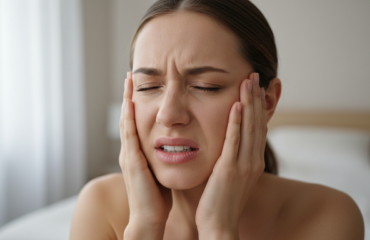
Bruxism results from disrupted communication between your brain and jaw muscles, amplified by stress responses and genetic predisposition, creating involuntary grinding or clenching that damages teeth and causes pain.
- Bruxism involves complex interactions between the central nervous system, trigeminal nerve pathways, and masticatory muscles
- Stress triggers cortisol release and sympathetic nervous system activation, directly increasing jaw muscle tension and grinding episodes
- Sleep bruxism differs from awake bruxism in both neurological mechanisms and muscle activation patterns
- Genetic factors influence neurotransmitter regulation and muscle fibre composition, affecting individual susceptibility to bruxism
- Understanding the underlying mechanisms helps identify why traditional approaches fail and why targeted interventions like muscle relaxation treatments prove effective
Bruxism is a complex neuromuscular condition involving dysregulation of the trigeminal nerve system, hyperactive jaw muscles, and stress-related central nervous system responses. The condition occurs when the brain’s normal inhibition of jaw muscle activity during sleep or waking hours becomes impaired, leading to involuntary grinding or clenching movements.
Bruxism represents more than a simple bad habit—it’s a complex neuromuscular disorder involving intricate interactions between your nervous system, jaw muscles, and brain chemistry. When you grind or clench your teeth, whether during sleep or whilst awake, your body is experiencing a breakdown in the normal regulatory mechanisms that control jaw movement. Understanding the biological foundations of bruxism reveals why this condition affects millions of people and why it often resists simple solutions.
The science behind bruxism encompasses multiple interconnected systems: the trigeminal nerve network that controls jaw muscles, neurotransmitter pathways that regulate muscle activity, stress responses that amplify muscle tension, and genetic factors that predispose certain individuals to develop the condition. Research suggests that bruxism isn’t caused by a single factor but rather emerges from the convergence of neurological, psychological, and physiological influences. This comprehensive understanding of bruxism’s mechanisms not only explains why you grind your teeth but also illuminates why certain treatments—including muscle-targeted therapies like those discussed in comprehensive guides to Botox® for teeth grinding—address the condition at its biological source.
The Neuromuscular System Behind Bruxism
How the Trigeminal Nerve Controls Jaw Movement
The trigeminal nerve serves as the primary control centre for all jaw movements, functioning as a complex communication network between your brain and the muscles responsible for chewing, grinding, and clenching. This cranial nerve comprises three major branches, with the mandibular division specifically controlling the masticatory muscles. Under normal circumstances, the trigeminal system maintains precise regulation of jaw muscle activity, coordinating thousands of subtle movements throughout the day whilst preventing excessive force generation.
In individuals with bruxism, this regulatory system experiences dysfunction. The trigeminal nerve’s normal inhibitory signals—which prevent unnecessary muscle activation—become impaired or overridden. Studies indicate that altered sensory feedback from the trigeminal system can trigger inappropriate motor responses, causing the jaw muscles to contract forcefully without conscious control. This neurological dysregulation explains why bruxism often occurs outside conscious awareness, particularly during sleep when higher brain centres exert less control over motor functions.
The Role of Masticatory Muscles in Grinding and Clenching
The masseter, temporalis, and pterygoid muscles form the primary muscle group responsible for jaw movement and force generation. These masticatory muscles rank amongst the strongest in the human body relative to their size, capable of generating substantial force—up to several hundred pounds per square inch during maximum contraction. This impressive strength serves an important evolutionary purpose for chewing tough foods, but in bruxism, this power becomes destructive.
During grinding or clenching episodes, these muscles enter sustained or rhythmic contractions that far exceed the force needed for normal function. The masseter muscle, which runs along the side of your jaw, becomes particularly hyperactive in bruxism patients. Clinical experience shows that chronic overactivity leads to muscle hypertrophy—the muscles actually increase in size from constant use, creating a squared jaw appearance in some patients. This muscular overdevelopment isn’t merely cosmetic; it reflects ongoing tissue stress and contributes to the pain, headaches, and jaw dysfunction associated with bruxism.
Central Pattern Generators and Involuntary Jaw Activity
Central pattern generators (CPGs) are neural networks in your brainstem that produce rhythmic, repetitive motor patterns without requiring conscious input. These networks control various automatic movements, including chewing, walking, and breathing. Research suggests that bruxism involves abnormal activation of the CPGs responsible for jaw movements, causing them to fire inappropriately during sleep or periods of stress.
Unlike normal chewing, which involves coordinated activation and relaxation of opposing muscle groups, bruxism-related CPG activity produces sustained co-contraction—multiple muscle groups contracting simultaneously. This pattern generates enormous force without the protective feedback mechanisms that normally prevent tissue damage during voluntary movements. The CPG dysfunction in bruxism appears to stem from altered neurotransmitter levels and disrupted inhibitory pathways that would normally suppress these motor patterns during rest periods.
The Stress-Bruxism Connection: What Happens in Your Brain
Cortisol, Adrenaline and Muscle Tension
Stress hormones fundamentally alter your body’s physiological state, creating conditions that promote bruxism. When you experience psychological stress, your hypothalamic-pituitary-adrenal axis activates, releasing cortisol into your bloodstream. Simultaneously, your adrenal glands secrete adrenaline, preparing your body for the classic “fight or flight” response. These hormones increase overall muscle tone throughout your body, including the masticatory muscles.
Cortisol elevation doesn’t merely cause temporary muscle tension—chronic stress leads to sustained elevation of baseline muscle activity. Your jaw muscles remain in a partially contracted state even during rest, creating a lower threshold for triggering full grinding or clenching episodes. Research indicates that individuals with higher baseline cortisol levels demonstrate increased frequency and intensity of bruxism episodes. The hormone’s effects extend beyond simple muscle tension; cortisol also influences neurotransmitter systems that regulate motor control, potentially disrupting the normal inhibitory mechanisms that prevent excessive jaw muscle activity.
The Sympathetic Nervous System’s Role in Jaw Clenching
Your autonomic nervous system comprises two complementary branches: the parasympathetic system, which promotes relaxation and recovery, and the sympathetic system, which activates stress responses. In bruxism patients, sympathetic nervous system activity often remains elevated, maintaining your body in a state of heightened alertness even during periods when relaxation should occur.
This sympathetic dominance manifests in multiple ways that contribute to bruxism. Increased sympathetic tone raises overall muscle tension, enhances sensitivity to triggering stimuli, and reduces the effectiveness of inhibitory neural pathways. Clinical observations suggest that patients with bruxism often display other signs of sympathetic overactivity, including elevated heart rate variability, increased blood pressure during sleep, and heightened startle responses. This systemic activation creates a physiological environment where jaw clenching becomes more likely and more intense.
Why Anxiety Manifests as Physical Jaw Tension
The connection between psychological anxiety and physical jaw tension involves specific neural pathways linking emotional processing centres to motor control regions. The amygdala, your brain’s emotional processing centre, maintains direct connections to brainstem regions that control jaw muscle activity. When anxiety activates the amygdala, these connections can trigger inappropriate activation of jaw muscles without conscious awareness.
Neuroscientific research indicates that anxiety alters the balance between excitatory and inhibitory neurotransmitters in motor control circuits. Glutamate, the brain’s primary excitatory neurotransmitter, increases in activity, whilst gamma-aminobutyric acid (GABA), which normally inhibits excessive motor activity, becomes less effective. This neurochemical imbalance removes the brakes on jaw muscle activation, allowing minor triggers to produce exaggerated muscle responses. The phenomenon explains why patients often report that their bruxism worsens during periods of increased life stress, even when they’re not consciously thinking about their stressors.
Sleep Bruxism vs Awake Bruxism: Different Mechanisms
Sleep Architecture and Nocturnal Grinding Episodes
Sleep bruxism demonstrates distinct patterns related to sleep stage transitions. Most grinding episodes occur during non-rapid eye movement (NREM) sleep, particularly during the lighter stages of sleep rather than deep sleep. Research suggests that sleep bruxism episodes cluster around transitions between sleep stages, when the brain shifts between different states of consciousness and motor control systems experience temporary instability.
The sleep-related form of bruxism appears linked to brief arousal responses—momentary increases in brain and body activity that don’t fully wake you but shift your sleep state. These microarousals trigger a cascade of physiological changes, including increased heart rate, altered breathing patterns, and activation of motor programmes that can include jaw muscle contractions. Studies indicate that sleep bruxism patients experience more frequent arousal responses than individuals without the condition, suggesting an underlying instability in sleep architecture that promotes grinding episodes.
Arousal Responses and Microawakenings
Microarousals represent brief shifts towards wakefulness lasting only a few seconds, often occurring without conscious awareness. During these events, your brain’s control over motor functions temporarily weakens, allowing automatic motor patterns to emerge. In bruxism patients, these vulnerable moments frequently trigger grinding episodes through a sequence of events: arousal occurs, the autonomic nervous system activates, jaw muscle tone increases, and rhythmic grinding movements begin.
The triggers for these microarousals vary considerably amongst individuals. Sleep-disordered breathing, including mild obstructive events that don’t meet diagnostic criteria for sleep apnoea, can provoke arousal responses. External stimuli such as noise, temperature changes, or movement can also trigger these events. Research indicates that bruxism patients often demonstrate heightened sensitivity to arousal stimuli, responding to disturbances that wouldn’t affect non-bruxism sleepers. This increased arousal susceptibility creates more opportunities for grinding episodes throughout the night.
Conscious vs Unconscious Muscle Control Patterns
Awake bruxism operates through different mechanisms than sleep bruxism, involving semi-conscious muscle tension rather than fully automatic motor patterns. During waking hours, jaw clenching typically occurs in response to concentration, stress, or habitual posturing. Unlike the rhythmic grinding movements characteristic of sleep bruxism, awake bruxism more commonly involves sustained clenching or static jaw positions.
The conscious form of bruxism often begins as a deliberate response to stress or concentration but gradually becomes an automatic habit. Your brain creates associative patterns linking certain situations or emotional states with jaw tension. Over time, these associations strengthen until the muscle activation occurs without conscious intention. Experts generally recommend that addressing awake bruxism requires both physiological interventions to reduce muscle hyperactivity and behavioural strategies to interrupt the automatic patterns linking psychological states to jaw tension.
Genetic and Biological Predisposition to Bruxism
Inherited Neurotransmitter Regulation Patterns
Genetic factors significantly influence bruxism susceptibility through inherited variations in neurotransmitter systems. Dopamine regulation appears particularly relevant, as this neurotransmitter plays crucial roles in motor control and stress responses. Research suggests that individuals with certain genetic variations affecting dopamine receptor density or dopamine transporter function demonstrate increased bruxism risk.
Serotonin pathways also show genetic variation that influences bruxism susceptibility. This neurotransmitter regulates mood, anxiety levels, and motor control—all factors relevant to teeth grinding. Family studies indicate that bruxism clusters within families, with children of bruxism patients showing substantially higher rates of the condition than the general population. Whilst environmental factors certainly contribute, twin studies suggest that genetic influences account for a significant portion of bruxism risk, with heritability estimates indicating that inherited factors play a substantial role in determining who develops the condition.
Muscle Fibre Composition and Force Generation
Individual variation in muscle fibre composition influences both bruxism susceptibility and severity. Skeletal muscles contain different fibre types with distinct properties: Type I fibres generate sustained, lower-force contractions and resist fatigue, whilst Type II fibres produce powerful, rapid contractions but fatigue quickly. The ratio of these fibre types varies amongst individuals based partly on genetic factors.
Clinical experience shows that individuals with higher proportions of Type II fibres in their masticatory muscles may generate greater grinding forces, potentially causing more severe dental damage and muscle symptoms. Additionally, inherited differences in muscle metabolism, calcium handling, and contractile protein function influence how muscles respond to neural activation signals. These biological variations help explain why bruxism severity varies considerably amongst patients, even when psychological stress levels appear similar.
Secondary Factors That Amplify Bruxism
Medications and Neurotransmitter Disruption
Numerous medications influence neurotransmitter systems in ways that can trigger or worsen bruxism. Selective serotonin reuptake inhibitors (SSRIs), commonly prescribed for depression and anxiety, alter serotonin levels in motor control regions and have been associated with increased bruxism in some patients. The mechanism appears to involve serotonin’s complex effects on dopamine systems, potentially disrupting the normal balance of motor control neurotransmitters.
Stimulant medications, including those used for attention deficit hyperactivity disorder, directly increase dopamine and noradrenaline activity. Whilst these effects improve focus and attention, they can also enhance motor system excitability and reduce inhibitory control over automatic movements. Other medication classes, including certain antihistamines, antipsychotics, and recreational substances, can similarly disrupt neurotransmitter balance in ways that promote bruxism. Patients who develop bruxism after starting new medications should discuss this side effect with their healthcare provider, as alternative treatments may be available.
Sleep Disorders and Breathing Abnormalities
Sleep-disordered breathing shows strong associations with bruxism, though the exact causal relationships remain under investigation. Obstructive sleep apnoea, characterised by repeated breathing interruptions during sleep, triggers arousal responses that can precipitate grinding episodes. Research suggests that the grinding may represent an adaptive response, as jaw movements help reopen the airway during obstructive events.
Even subtle breathing abnormalities that don’t meet diagnostic criteria for sleep apnoea can influence bruxism. Upper airway resistance, characterised by increased effort required for breathing during sleep, creates physiological stress that promotes arousal responses and muscle tension. Studies indicate that treating underlying sleep-disordered breathing often reduces bruxism frequency, suggesting that respiratory factors play important roles in many cases. This connection highlights the importance of comprehensive evaluation when bruxism proves resistant to standard interventions.
Dental Occlusion and Bite Alignment Issues
The relationship between dental occlusion—how your teeth fit together—and bruxism remains somewhat controversial. Historical dental theory suggested that bite misalignment directly caused bruxism, leading to aggressive treatment approaches focused on adjusting tooth contacts. Contemporary research indicates a more nuanced relationship: whilst major occlusal discrepancies may contribute to bruxism in some cases, most evidence suggests that bite problems are more often consequences rather than primary causes of grinding.
However, dental factors can certainly amplify bruxism once it develops. Uneven tooth contacts may trigger protective muscle responses that worsen clenching. Missing teeth alter jaw biomechanics in ways that can increase muscle strain. Poorly fitting dental restorations may create sensory irritation that provokes grinding. Clinical observations suggest that addressing significant dental problems can reduce bruxism severity in selected patients, even when occlusal factors weren’t the primary cause. This relationship underscores bruxism’s multifactorial nature, where various contributing factors interact to determine symptom severity.
Why Understanding Bruxism Science Matters for Treatment
How Mechanism Knowledge Guides Intervention Selection
Understanding bruxism’s biological mechanisms transforms treatment from trial-and-error to targeted intervention. When you recognise that bruxism involves neuromuscular dysregulation rather than simple habit, treatment priorities shift towards interventions that address the underlying physiology. This scientific framework explains why certain approaches prove more effective than others and helps predict which patients will respond to specific treatments.
For stress-related bruxism driven by sympathetic nervous system overactivity, interventions that promote parasympathetic activation—including relaxation techniques, stress management, and certain medications—directly address causal mechanisms. For patients with sleep-related bruxism linked to arousal responses, improving sleep quality and addressing sleep disorders becomes paramount. Mechanism-based treatment selection increases the likelihood of successful outcomes whilst reducing time and resources spent on ineffective approaches.
The Scientific Basis for Muscle-Targeted Therapies
Muscle-targeted therapies, including botulinum toxin injections as detailed in comprehensive guides to Botox® for teeth grinding and jaw clenching, directly address the neuromuscular dysfunction central to bruxism. These interventions work by temporarily reducing the excessive force generation capacity of hyperactive jaw muscles, breaking the cycle of muscle overactivity, tissue damage, and pain that characterises chronic bruxism.
The scientific rationale for muscle-targeted approaches stems from understanding that bruxism involves dysregulated motor control rather than purely psychological factors. Whilst stress management and behavioural interventions address important contributing factors, they may not fully resolve the neuromuscular dysfunction in patients with established bruxism. Combining approaches that address both the psychological triggers and the muscular manifestations of bruxism offers the most comprehensive treatment strategy, targeting the condition at multiple levels of its complex causation.
Understanding bruxism’s scientific foundations empowers you to make informed decisions about treatment, set realistic expectations, and recognise that effective management often requires addressing multiple contributing factors. This knowledge transforms bruxism from a mysterious affliction into an understandable medical condition with rational, mechanism-based treatment approaches.
Frequently Asked Questions
What causes bruxism at a biological level?
Bruxism results from dysregulation in the neuromuscular systems controlling jaw movement, involving the trigeminal nerve network, central pattern generators in the brainstem, and neurotransmitter imbalances affecting motor control. The condition emerges when normal inhibitory mechanisms that prevent excessive jaw muscle activity become impaired, allowing inappropriate muscle contractions to occur during sleep or waking hours.
Is bruxism caused by stress or is it a physical problem?
Bruxism represents both a stress-related and physical condition simultaneously. Psychological stress influences bruxism through hormonal changes, sympathetic nervous system activation, and neurotransmitter alterations that increase muscle tension and reduce motor control inhibition. However, the actual grinding and clenching involve physical neuromuscular dysfunction. Effective treatment typically addresses both the psychological contributors and the physical manifestations.
Why do I grind my teeth at night but not during the day?
Sleep bruxism and awake bruxism involve different mechanisms. Nocturnal grinding occurs primarily during sleep stage transitions and microarousals when conscious motor control weakens, allowing automatic motor patterns to emerge. During waking hours, higher brain centres maintain greater control over jaw muscles. Additionally, sleep-related factors including breathing abnormalities and arousal responses specifically trigger nocturnal grinding episodes.
Can bruxism be inherited from parents?
Research suggests significant genetic influence on bruxism susceptibility. Inherited factors affecting neurotransmitter regulation, particularly dopamine and serotonin systems, influence bruxism risk. Genetic variations in muscle fibre composition and stress response systems also contribute. Family studies show that children of bruxism patients develop the condition more frequently than the general population, indicating substantial hereditary components alongside environmental influences.
What happens in the brain during a teeth grinding episode?
During grinding episodes, central pattern generators in the brainstem activate inappropriately, triggering rhythmic contractions of jaw muscles. Neurotransmitter imbalances reduce normal inhibitory control, whilst arousal-related increases in sympathetic nervous system activity raise muscle tone. The trigeminal nerve transmits excessive activation signals to masticatory muscles, causing forceful, sustained contractions that generate the characteristic grinding movements and substantial bite forces.
Related Articles
- how Botox® treatments work for teeth grinding
– Connects scientific understanding to the parent pillar’s treatment approach, showing patients how mechanism knowledge supports treatment decisions