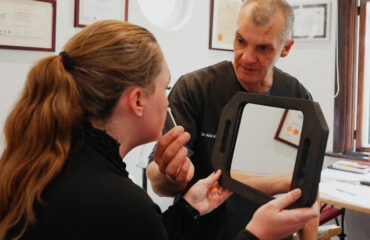
Understanding what is causing your under-eye hollows is the essential first step before considering tear trough filler, because anatomy, skin quality, and the underlying cause all determine whether filler is appropriate, safe, and likely to improve your concern.
- Under-eye hollows are caused by a combination of volume loss, structural changes, and skin laxity, not a single factor.
- Not everyone with dark circles or under-eye concerns is suited to tear trough filler; assessment determines whether filler, midface support, or an alternative approach is appropriate.
- Hyaluronic acid-based dermal fillers are the most commonly used option for tear trough correction, but technique and product selection are critical to safety.
- Ultrasound technology plays an important role in vascular mapping and safe injection in the periorbital area.
- Recovery is generally mild, but swelling and bruising are common in the first one to two weeks; realistic expectations are essential.
Under-eye hollows form when volume is lost in the tear trough area, creating a shadowed depression between the lower eyelid and cheek. Dermal filler can address this, but suitability depends on skin quality, anatomy, and the underlying cause. A careful assessment should always precede treatment to ensure safety and appropriate outcomes.
You notice it first in certain lighting. A shadow sits beneath your eyes that no amount of sleep seems to shift, and concealer only does so much. Before you consider tear trough filler as a solution, it is worth understanding what is actually happening beneath the surface, because under-eye hollows are rarely as straightforward as they appear, and the right approach depends entirely on what is driving the change in your particular anatomy.
Under-eye hollows form when volume is lost in the tear trough area, creating a shadowed depression between the lower eyelid and cheek. Dermal filler can address this, but suitability depends on skin quality, anatomy, and the underlying cause. A careful assessment should always precede treatment to ensure safety and appropriate outcomes.
This article walks you through the anatomy behind under-eye hollows, how to distinguish them from other concerns that look similar, what tear trough filler involves, and what a proper assessment considers before any treatment decision is made.
—
What Are Under-Eye Hollows and Why Do They Develop?
The anatomy of the tear trough
The tear trough is a ligamentous structure that runs diagonally from the inner corner of the eye towards the outer cheek. It marks the boundary between the lower eyelid and the cheek, and in youth, the transition between these two areas is smooth and gradual. As the face changes over time, this boundary becomes more defined and the depression more visible.
Beneath the skin in this area sit several distinct fat compartments. The orbital fat sits within the eye socket, while separate fat pads occupy the cheek and midface below. These compartments are independent of one another, and they respond differently to the ageing process. When the fat directly beneath the eye reduces in volume, or when the cheek fat descends, the tear trough becomes more pronounced and a hollow shadow appears.
Why volume loss, bone remodelling, and skin changes all contribute
Under-eye hollows are not caused by a single factor. Volume loss in the periorbital fat compartments is one contributor, but bone remodelling plays an equally important role. Research in facial anatomy suggests that the orbital rim and midface skeleton undergo measurable changes with age, with the orbital aperture widening and the bony support beneath the lower eyelid receding. This structural shift means the soft tissue above has less support, which deepens the hollow.
Skin quality also matters. As collagen and elastin reduce over time, the skin over the tear trough becomes thinner and less resilient. Thinner skin makes any underlying depression more visible and casts a deeper shadow. Sun exposure, which is a significant consideration in Cape Town’s climate, accelerates these skin changes. Genetics influence how early and how noticeably these changes appear. Some people develop visible hollows in their late twenties; others may not notice them until their forties or beyond.
—
Dark Circles, Under-Eye Bags, and Hollows: How Do You Tell the Difference?
When shadow is the problem, not pigmentation
The three most common under-eye concerns, hollows, dark circles, and under-eye bags, are frequently confused because they can look similar in photographs and even in the mirror. Identifying the correct cause matters because the treatment for one can worsen another.
True under-eye hollows create darkness through shadow. The depression in the tissue catches light differently from the surrounding area, producing a darkened appearance that shifts depending on the angle of light. If you lift the skin gently or look in a well-lit environment and the darkness reduces, shadow is likely the primary cause.
Pigmentation-related dark circles are different. These involve actual colour change in the skin itself, caused by melanin deposits, visible blood vessels beneath thin skin, or post-inflammatory changes. Pigmentation remains visible regardless of lighting angle and does not shift when the skin is repositioned. VISIA skin analysis can be particularly useful here, as it reveals subsurface pigmentation that standard examination may not detect, helping to clarify what proportion of the darkness is structural versus pigment-driven.
Understanding true under-eye bags and why filler is rarely the answer
Under-eye bags are caused by protrusion of orbital fat through a weakened orbital septum, the membrane that normally holds the fat in place. The result is a soft, sometimes fluid-like bulge beneath the eye that may be more noticeable in the morning. This is a structural issue and filler does not address it. Placing filler below an existing bag can, in some cases, make the area appear heavier rather than smoother.
Distinguishing between these three concerns requires an in-person assessment. No photograph or self-assessment reliably separates them, and attempting to treat one without accurately identifying the other can lead to outcomes that fall short of expectations.
—
What Is Tear Trough Filler and How Does It Work?
Why hyaluronic acid-based dermal fillers are preferred in this area
Tear trough filler involves the careful placement of dermal filler into or adjacent to the tear trough depression to restore volume, smooth the transition between the lower eyelid and cheek, and reduce the shadowed appearance. Hyaluronic acid-based dermal fillers are the product of choice for this area for several reasons.
Hyaluronic acid is a naturally occurring substance found in the skin and connective tissue. It attracts and retains water, which gives it a volumising and hydrating effect when injected. In the tear trough, a filler with low cohesivity and appropriate softness is selected to avoid visible lumps or an unnatural texture in an area where the skin is very thin. Product selection is not interchangeable: the same filler used in the lips or cheeks would not be appropriate beneath the eye.
Critically, hyaluronic acid-based dermal fillers are reversible. If the outcome is unsatisfactory or a complication arises, an enzyme called hyaluronidase can dissolve the filler. This reversibility is one of the most important safety advantages of hyaluronic acid in this higher-risk area of the face.
The role of midface support in under-eye rejuvenation
The under-eye area does not exist in isolation. The position and volume of the cheek and midface directly influence how the tear trough appears. When the midface loses volume and descends, the lower eyelid appears longer and the hollow beneath the eye deepens. In many cases, restoring volume to the midface can improve the tear trough indirectly, with a more natural outcome and lower risk than placing filler directly beneath the eye.
Your assessment will determine whether tear trough filler alone, midface support alone, or a combination of both is the most appropriate approach for your anatomy. This is not a decision that can be made from a photograph.
—
Are You Suited to Tear Trough Filler? What a Proper Assessment Evaluates
Skin quality, fat compartment assessment, and orbital anatomy
Not everyone with under-eye hollows is suited to tear trough filler, and a careful assessment is the only way to determine whether it is appropriate for you. Several factors are evaluated during this process.
Skin thickness and quality are assessed first. Very thin skin in the tear trough area increases the risk of the Tyndall effect, a bluish discolouration caused by light scattering through superficially placed filler. VISIA skin analysis supports this evaluation by revealing the condition of the skin at a subsurface level, including hydration, collagen quality, and pigmentation patterns that may influence the approach.
The fat compartments beneath the eye are assessed to determine whether volume loss is the primary driver of the hollow, or whether bone remodelling and skin laxity are more significant contributors. If laxity is the dominant factor, filler may provide limited improvement and could create an uneven appearance.
Orbital anatomy also matters. The depth of the orbital rim, the position of the lower eyelid, and whether any degree of lower eyelid laxity is present all influence technique and suitability. Patients with significant lower eyelid laxity or prominent orbital fat may not be ideal candidates for filler.
When tear trough filler is not the right approach
Some presentations are better addressed through midface volumisation, skin quality treatments such as microneedling with Dermapen 4, or in some cases a referral for surgical assessment. A diagnostic-first approach means that if filler is not the right answer for your anatomy, that will be communicated honestly during your consultation, with an explanation of what would serve you better.
—
Are Tear Trough Fillers Safe? Understanding the Risks and How They Are Managed
Why ultrasound technology matters in periorbital injections
The periorbital area carries a higher risk profile than many other areas of the face. Blood vessels in this region, including branches of the ophthalmic artery, are in close proximity to the injection sites. Inadvertent intravascular injection in this area is a rare but serious complication, which is why technique, anatomical knowledge, and the use of supporting technology are all relevant to safety.
Ultrasound technology supports safe practice in this area in more than one way. It can be used for vascular mapping before injection to identify the position of blood vessels in your specific anatomy, which varies between individuals. It also has a role in guiding assessment and, if a vascular complication were to occur, in supporting its management. Using ultrasound in this way reflects the practice’s emphasis on safety in a high-risk area.
Recognising and managing complications
The most common side effects of tear trough filler are swelling and bruising, both of which are expected and temporary. Less common but important complications include the Tyndall effect from superficial placement, lumpiness or irregularity, and asymmetry. Vascular complications, whilst rare, require immediate recognition and management, which is why treatment in this area should only be performed by a practitioner with the training and equipment to respond appropriately.
Hyaluronidase should always be available at any practice performing tear trough filler. Discussing your full medical history, including any previous filler treatments in this area, during your assessment is essential to identifying any factors that may affect your risk profile.
—
What to Expect: Tear Trough Filler Recovery, Aftercare, and Realistic Outcomes
The first 48 hours and managing swelling
Swelling after tear trough filler is very common and is often more pronounced here than in other areas of the face. The tissue beneath the eye is thin, loose, and highly vascular, which means it responds to any injection with more visible swelling than denser areas. You should expect some degree of puffiness in the first 24 to 48 hours, and in some cases swelling may appear to worsen before it improves.
Sleeping with your head slightly elevated in the first few nights helps reduce fluid accumulation. Avoiding strenuous exercise, alcohol, and excessive heat in the first 48 hours also supports the settling process. Bruising, if it occurs, typically resolves within one to two weeks. Most people find they are comfortable returning to work and social activities within a few days, with the understanding that the area may still look slightly swollen.
The final outcome is not visible immediately. Swelling can mask the true result for up to two to four weeks, and it is important to allow this time before assessing whether any refinement is needed.
How long do tear trough filler results typically last?
Tear trough filler typically lasts between nine and eighteen months, though individual response varies. The tear trough area generally retains filler for longer than more mobile areas of the face because there is less repetitive movement. Factors including the product used, the volume placed, your metabolism, and how your body responds to hyaluronic acid all influence longevity.
Maintenance timing is discussed at your follow-up, based on how your response develops. The goal is subtle, sustained improvement rather than repeated correction from zero.
—
The Assessment-First Approach to Under-Eye Rejuvenation at Dr Alek Nikolic
How VISIA analysis and ultrasound support the consultation process
At Dr Alek Nikolic, every conversation about tear trough filler begins with assessment, not treatment. The under-eye area is one of the most anatomically complex regions of the face, and the range of concerns that present as “hollows” or “dark circles” is wide enough that a careful evaluation is genuinely necessary before any approach is recommended.
VISIA skin analysis forms part of the assessment process. This imaging technology reveals subsurface skin characteristics, including pigmentation depth, collagen quality, and vascular patterns, that are not visible during standard examination. For under-eye concerns, this detail helps distinguish between shadow-driven hollows, pigmentation-related darkness, and skin quality issues, each of which calls for a different approach.
Ultrasound technology supports the assessment of vascular anatomy before any periorbital injection is considered. Knowing where your blood vessels sit, rather than relying on population averages, is a meaningful safety measure in an area where the consequences of a vascular complication are serious.
Dr Alek serves as Allergan Local Country Mentor in Facial Aesthetics and has lectured internationally on facial anatomy and injection technique. The practice team includes Dr Lynelle, Vashnee (skincare therapist), and Sam (practice coordinator), each contributing to a care environment that prioritises your understanding of your own anatomy and options.
What happens when filler alone is not the complete answer
Some patients who come in asking about tear trough filler leave with a different plan entirely, and that is by design. If your assessment indicates that midface volume loss is the primary driver of your hollow, midface filler may be recommended instead of, or alongside, tear trough treatment. If skin quality is a significant factor, a skin health protocol involving Dermapen 4 microneedling or skin boosters (bio-remodelling injectables) may be introduced first to improve the tissue before any volumising treatment is considered.
In some presentations, particularly where lower eyelid laxity or significant orbital fat protrusion is present, a referral for surgical assessment is the most honest and appropriate recommendation. The practice’s commitment to a diagnostic-first methodology means that the answer to “am I suited to tear trough filler?” is always based on your anatomy, not on a predetermined treatment menu.
If you are considering tear trough filler or want to understand what is driving the changes you are noticing beneath your eyes, the starting point is a detailed consultation. Book your assessment at Dr Alek Nikolic to find out which approach is right for your anatomy.
—
Frequently Asked Questions About Tear Trough Filler
What causes hollows under my eyes?
Under-eye hollows develop as a result of several overlapping changes: volume loss in the fat compartments beneath the eye, remodelling of the underlying bone structure, and gradual laxity in the overlying skin. Genetics, sun exposure, and general health all influence how early and how noticeably these changes appear. Some people develop hollows in their late twenties; others not until their forties or beyond.
How do I know whether I have dark circles, under-eye bags, or hollows?
These three concerns look similar but have different causes and require different approaches. Hollows create a shadow because of a depression in the tissue. True dark circles involve pigmentation in the skin itself. Under-eye bags are caused by protrusion of orbital fat. A careful assessment is the only reliable way to distinguish between them, because treatment that is right for one concern may worsen another.
Is tear trough filler safe?
Tear trough filler is considered safe when performed by a trained medical practitioner using appropriate technique and suitable product. The periorbital area carries a higher risk profile than some other areas because of the proximity of blood vessels supplying the eye. Ultrasound technology for vascular mapping and careful injection technique are important safety measures. Discussing your full medical history and any previous treatments during your assessment is essential.
Am I a good candidate for tear trough filler?
Suitability depends on several factors assessed during a detailed consultation: the depth and cause of your hollows, your skin thickness and quality, the degree of midface volume loss, and your orbital anatomy. Some people benefit more from midface filler than tear trough filler directly. Others may not be suited to filler at all and would be better served by a different approach. There is no reliable way to determine suitability without an in-person assessment.
How much swelling should I expect after tear trough filler?
Swelling in the under-eye area after filler is very common and is often more noticeable here than in other areas of the face, because the tissue is thin and loose. Most swelling settles within seven to fourteen days, though some patients notice minor fluctuation for up to four weeks. Sleeping with your head slightly elevated in the first few nights and avoiding strenuous exercise in the first 48 hours can help minimise swelling.
How long does tear trough filler last?
Tear trough filler typically lasts between nine and eighteen months, though this varies depending on the product used, the volume placed, your metabolism, and how your body responds to the filler. The tear trough area generally retains filler for longer than more mobile areas of the face. Your practitioner will advise on timing for maintenance based on how your response develops over the weeks following treatment.
Can tear trough filler make dark circles worse?
If the dark circles are caused by shadow from a hollow, filler can improve their appearance by restoring volume and reducing the depth of the depression. However, if the darkness is caused by pigmentation in the skin, filler will not address it and may, in some cases, create a bluish tint known as the Tyndall effect if placed too superficially. This is one reason why distinguishing the cause of dark circles before treatment is so important.
What is the Tyndall effect and how is it avoided?
The Tyndall effect is a bluish discolouration that can occur when hyaluronic acid-based filler is placed too close to the surface of the skin in areas with thin tissue, such as the under-eye area. It is caused by the way light scatters through the filler. Avoiding it requires careful product selection and precise placement at the correct depth, which is why technique and anatomical knowledge matter so much in this area.
Can tear trough filler be reversed if I am not happy with the outcome?
Hyaluronic acid-based dermal fillers can be dissolved using an enzyme called hyaluronidase if the outcome is unsatisfactory or if a complication arises. This is one of the reasons hyaluronic acid is the preferred product for tear trough treatment: the reversibility adds an important safety margin. Dissolution is a medical procedure in its own right and should be performed by a qualified practitioner.
Why might my practitioner suggest midface filler instead of tear trough filler?
The under-eye area does not exist in isolation. When volume is lost in the midface and cheek, the lower eyelid can appear to descend and the hollow beneath the eye becomes more pronounced. In these cases, restoring volume to the midface can improve the appearance of the tear trough indirectly, with less risk and often a more natural outcome than placing filler directly under the eye. Your assessment will determine which approach, or combination of approaches, is most appropriate for your anatomy.
Related Articles
- Why Hyaluronic Acid Is the Preferred Choice for Tear Trough and Eye Rejuvenation
– Related cluster article - Managing Tear Trough Filler Complications: Recognition, Treatment, and Prevention
– Related cluster article