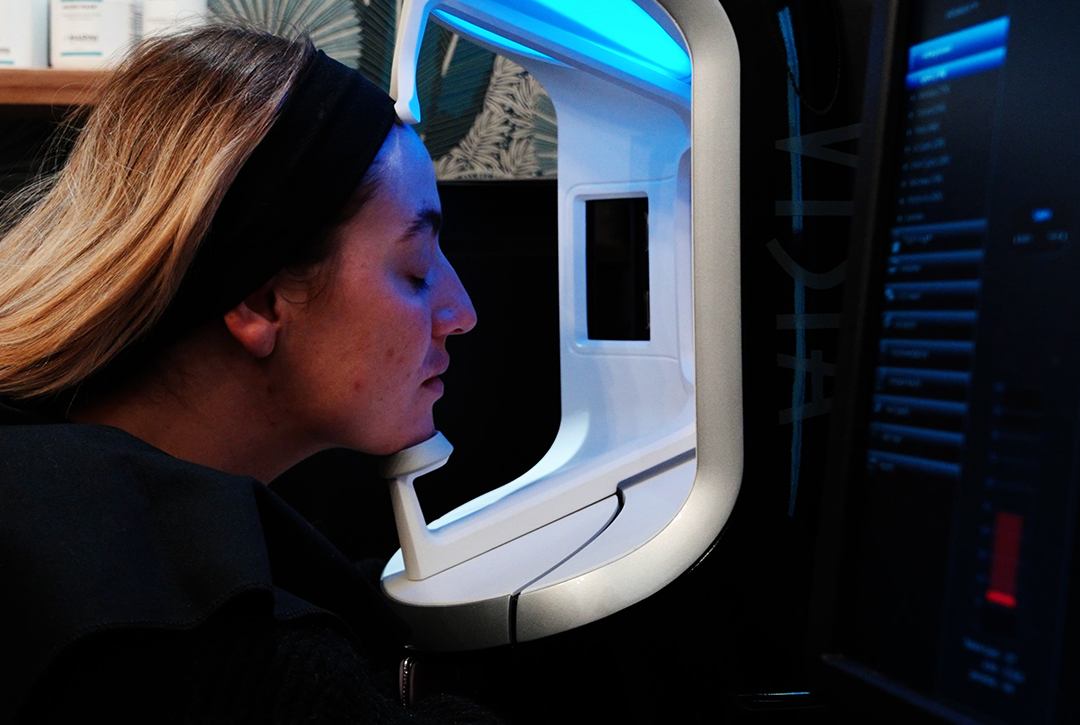
Tracking pigmentation progress clinically, using tools like VISIA imaging and structured protocol check-ins, reveals genuine skin changes that mirrors and before-and-after photos routinely miss.
- Visible improvement in melasma often lags behind actual skin changes, which is why clinical imaging matters more than mirror checks alone.
- Progress is non-linear: temporary flares, seasonal variation, and skin cycling can all make pigmentation appear worse before it improves.
- VISIA skin analysis captures UV damage and melanin distribution beneath the skin surface, revealing progress that standard photography cannot show.
- Meaningful milestones in a pigmentation protocol are measured in months, not weeks, with the first honest assessment point typically at eight to twelve weeks.
- Tracking serves a second purpose beyond motivation: it allows your clinician to adjust the protocol based on objective data rather than subjective impression.
Pigmentation treatment progress is rarely linear. Genuine improvement in melasma typically becomes measurable after eight to twelve weeks, with meaningful change often visible only at the three to six month mark. Clinical tools such as VISIA imaging capture subsurface changes that the naked eye misses, making structured check-ins essential for accurate progress assessment.
You take a photo in the bathroom mirror one morning and feel certain your pigmentation has worsened. A week later, in different light, it looks almost gone. Neither observation is reliable, and both can derail your confidence in a protocol that is actually working. Tracking pigmentation improvement accurately requires more than a smartphone camera and good intentions. It requires structured assessment, clinical tools, and an understanding of what genuine progress looks like at each stage. If you are already familiar with why melasma demands a protocol-based approach rather than a single-product fix, the layered treatment framework and realistic timelines explained in this guide to treating melasma and stubborn pigmentation provide the essential context for what follows here.
—
Why Standard Before-and-After Photos Don’t Tell the Full Story of Pigmentation Progress
What VISIA Skin Analysis Actually Reveals That Photography Cannot Capture
Pigmentation does not exist only on the skin’s surface. Melasma, in particular, often has a dermal component sitting below the epidermis, where melanin deposits are invisible to the naked eye and to standard photography. VISIA skin analysis uses cross-polarised and UV fluorescence imaging to reveal subsurface pigmentation, pore distribution, texture irregularities, and UV damage that standard photographs simply cannot detect.
This matters for tracking progress because a treatment protocol targeting dermal pigmentation may produce measurable subsurface improvement weeks before any visible surface change appears. Without imaging, you might conclude the protocol is not working when, in fact, it is addressing the deeper layer first. VISIA provides a quantified baseline at the outset and a comparable data point at each review, removing the subjectivity that makes self-assessment so unreliable.
How Lighting, Skin Texture, and Skin Cycling Distort Your Perception of Progress
Natural light, overhead bathroom lighting, and phone flash each render pigmentation differently. Warm light minimises contrast between pigmented and non-pigmented skin; harsh overhead light exaggerates it. This means the same patch of melasma can appear dramatically lighter or darker depending entirely on where you are standing when you look.
Skin texture adds another layer of confusion. When a treatment protocol increases cell turnover, the skin surface temporarily becomes uneven as older, pigmented cells shed and fresh cells emerge. During this phase, pigmentation can appear more prominent even as the underlying process is moving in the right direction. Skin cycling, the natural rhythm of renewal, also means pigmentation fluctuates across the month. Hormonal shifts, sun exposure, and heat all influence melanin activity day to day. Comparing a photo taken after a weekend outdoors to one taken after a week of careful sun protection will tell you very little about your protocol’s actual performance.
—
What Does Pigmentation Improvement Actually Look Like at Each Stage of a Protocol?
Weeks One to Four: Skin Adjustment and Why Early Changes Can Be Misleading
The first four weeks of a pigmentation protocol are rarely the period in which you will see meaningful visual improvement. What you are more likely to notice is skin adjustment: mild sensitivity, occasional dryness, or a temporary increase in redness as active ingredients begin working. Some people experience what looks like a worsening of pigmentation during this phase, particularly if the protocol includes ingredients that increase epidermal turnover.
This is not a sign that the treatment is wrong for your skin. It reflects the process of older, pigmented cells being brought to the surface before they shed. Stopping a protocol at week three because things look “worse” is one of the most common reasons pigmentation treatment fails to deliver its potential. If you are uncertain whether what you are experiencing is normal adjustment or a genuine adverse response, a check-in with your clinician is always the right call rather than self-managing.
Months Two to Three: The First Honest Assessment Window
The eight to twelve week mark is generally where the first reliable assessment of progress becomes possible. By this point, the skin has adjusted to the protocol, cell turnover has stabilised, and the cumulative effect of consistent treatment begins to show. Pigmentation may appear lighter, more diffuse, or less sharply defined at its borders. VISIA imaging at this stage allows a direct, objective comparison to your baseline, often revealing subsurface improvement that precedes visible surface change.
This is also the window in which your clinician can make informed adjustments. If improvement is measurable but modest, the protocol may be intensified. If the skin has responded well, the approach can be consolidated. The three-month mark is not a finish line; it is the first point at which the data is genuinely meaningful.
Months Four to Six and Beyond: Consolidation, Maintenance, and Recalibrating Expectations
Pigmentation improvement between months four and six tends to be more gradual and, in many cases, more stable. The dramatic early shifts have settled, and what remains is a clearer picture of what the protocol can and cannot achieve for your particular pattern of pigmentation. If you are curious about whether your pigmentation is primarily post-inflammatory, UV-driven, or hormonally linked, the distinction matters for long-term management, and the detail explored in understanding your pigmentation type is relevant here.
Beyond six months, the focus shifts towards maintenance and relapse prevention. Pigmentation that has responded well can return if the conditions driving it, particularly UV exposure and hormonal fluctuation, are not actively managed. Progress at this stage is measured not only by how much improvement has occurred but by how well it is being sustained.
—
How Structured Check-ins Help Your Clinician Adjust Your Protocol Over Time
What Your Clinician Is Actually Evaluating at Each Review Appointment
A review appointment is not simply a visual check. Your clinician is comparing VISIA data across time points, assessing skin texture and barrier health, reviewing your home-care adherence, and asking about changes in lifestyle, sun exposure, and hormonal status. All of these factors influence pigmentation activity and determine whether the current protocol remains appropriate or needs to be modified.
The frequency of check-ins typically reflects the intensity of your protocol. During an active treatment phase, a review every four to six weeks allows for timely adjustments. As the protocol transitions into maintenance, appointments may become less frequent, but they remain important for catching early signs of recurrence before they become established.
When a Plateau in Progress Signals a Protocol Change Rather Than Treatment Failure
A plateau in visible improvement does not automatically mean the treatment has stopped working. It may indicate that the surface pigmentation has been adequately addressed and that deeper, dermal pigmentation now requires a different approach. It may also signal that a contributing factor, such as ongoing UV exposure or hormonal influence, is counteracting the protocol’s effects.
Your clinician uses the combination of clinical observation and VISIA data to distinguish between these scenarios. A genuine plateau that persists across two consecutive review appointments, with no identifiable external cause, is a reasonable prompt to consider whether the protocol needs to be adjusted, whether a procedural option might complement the current approach, or whether the expectations being measured against are realistic for your specific pigmentation pattern.
Progress in pigmentation treatment is not always visible, not always linear, and not always measurable in the mirror. Structured tracking, honest clinical conversations, and a willingness to stay the course through the adjustment phases are what separate a protocol that delivers genuine improvement from one abandoned too soon.
Frequently Asked Questions
How long does it take to see real improvement in melasma treatment?
Measurable improvement in melasma typically becomes visible between eight and twelve weeks into a structured protocol, though meaningful change is more reliably assessed at the three to six month mark. Early changes are often subtle and can be obscured by skin adjustment, seasonal variation, or temporary flares. Clinical imaging at scheduled check-ins gives a more accurate picture than daily mirror observation.
Why does my pigmentation sometimes look worse during treatment?
Apparent worsening early in a protocol is common and has several causes. Active ingredients such as retinoids can initially increase skin sensitivity, making existing pigmentation appear more prominent. Skin cycling, where melanin moves towards the surface before shedding, can temporarily darken marks. This does not necessarily mean the treatment is failing; your clinician will use objective imaging to distinguish a productive skin response from a genuine adverse reaction.
What does VISIA imaging show that a regular photo cannot?
VISIA skin analysis uses cross-polarised and UV lighting to capture melanin distribution beneath the skin surface, revealing pigmentation that is not yet visible to the naked eye. This subsurface data allows your clinician to assess whether UV damage is increasing or decreasing over time, even before surface colour changes appear. It also standardises the imaging conditions across appointments so that comparisons are clinically meaningful rather than affected by lighting or camera angle.
How often should I have a check-in during a pigmentation protocol?
Check-in frequency depends on your specific protocol and the treatments involved, but a structured review at eight to twelve weeks is typically the first useful assessment point. After that, three to six monthly reviews are common during active treatment, with less frequent maintenance check-ins once pigmentation has stabilised. Your clinician will advise a schedule based on your skin’s response and the complexity of your protocol.
Is it normal for my pigmentation to look different depending on the lighting?
Yes, and this is one reason why self-assessment under variable lighting is unreliable. Natural daylight, indoor lighting, and phone camera flash all render pigmentation differently, making it genuinely difficult to judge progress at home. Standardised clinical imaging removes this variable, which is why objective tracking tools are more informative than personal observation alone, particularly for conditions like melasma where colour variation is already a defining feature.
What does a plateau in my pigmentation progress actually mean?
A plateau, where visible improvement stalls despite consistent protocol adherence, does not automatically mean treatment has failed. It often signals that the current approach has reached its ceiling for your skin and that a protocol adjustment is needed. This might involve adding a different active ingredient, incorporating a procedure such as a chemical peel or microneedling with Dermapen 4, or reviewing sun protection habits. Objective imaging at this stage helps your clinician make that decision based on data rather than assumption.
Can I track my own pigmentation progress at home between appointments?
Home tracking can be a useful supplement to clinical assessment, but it works best when kept consistent. Taking photos in the same location, under the same light source, at the same time of day, and without filters gives you a more reliable personal record. That said, home photos cannot capture subsurface changes and are prone to perception bias, so they should inform your conversation at your next appointment rather than replace clinical evaluation.
Related Articles
- why melasma requires a structured protocol rather than a single product
– Parent pillar establishes the foundational case for protocol-based treatment; linking here grounds the tracking article within the broader treatment context and supports pillar authority. - understanding whether your pigmentation is melasma, sun damage, or post-inflammatory marks
– Sibling cluster article explains pigmentation type identification, which is directly relevant when discussing why progress timelines vary and why accurate diagnosis affects tracking expectations.