Choosing and using sunscreen well comes down to understanding SPF, broad spectrum labelling, how much to apply and when to reapply, then matching the formula to your skin type and daily routine.
- A broad spectrum sunscreen of SPF 30 or higher is the baseline for daily sun protection.
- Most people apply far too little: about a teaspoon for the face, neck and ears is the standard guide.
- Reapplying every two hours outdoors matters as much as the SPF number on the bottle.
- Mineral and chemical sunscreens both work; the best choice depends on your skin type and lifestyle.
- Sunscreen is one layer of protection, not the whole plan: shade, clothing, a hat and UV-blocking sunglasses all count.
To choose the right sunscreen, look for broad spectrum protection, an SPF of 30 or higher and a formula that suits your skin type. Apply about a teaspoon to your face, neck and ears, and reapply every two hours when you are outdoors and straight after swimming, sweating or towelling off. A water resistant formula helps for swimming and sport, but it still needs reapplying.
How to Choose and Use Sunscreen This Summer
Pick up a sunscreen from any South African pharmacy shelf and you face a wall of numbers, abbreviations and marketing language. SPF 30 or 50? Mineral or chemical? Water resistant or waterproof? Broad spectrum or not? Most people grab something familiar and move on, which often means using a formula that does not suit them, applying too little of it and reapplying too rarely to make a real difference.
Getting sunscreen right matters more here than in most places. South Africa’s summer UV index regularly reaches the extreme range, from the coast to the Highveld, and long outdoor days mean that too little protection adds up to real skin damage over time. For the broader picture of what UV does to your skin, our guide Summer Sun and Your Skin: A South African Guide covers the background in detail. This article focuses on the practical side: choosing a sunscreen, reading the label, applying it properly and building sun protection into your daily life, not only your beach bag.
The good news is that once you understand the label, choosing and using sunscreen becomes straightforward. The principles are simple, applying it takes very little time, and the long-term benefit to your skin is significant.
Understanding Sunscreen Labels: What SPF, Broad Spectrum and Water Resistance Mean
What SPF means and which number to choose
SPF stands for Sun Protection Factor. Understanding what SPF means starts with knowing that it measures protection against UVB, the rays that cause sunburn. In testing, it compares how much UV it takes to redden protected skin with how much it takes to redden unprotected skin. The number does not translate into minutes in the sun, because that depends on your skin and on how strong the UV is at the time.
SPF 15 filters about 93% of UVB rays, SPF 30 about 97% and SPF 50 about 98%. The gap between 30 and 50 sounds small, but it means roughly a third less UVB reaching your skin, which matters for people with fair skin, a history of burning or a family history of skin cancer.
For daily use, a minimum of SPF 30 is the usual recommendation. For long days outdoors, beach days, sport or anything that makes you sweat or swim, SPF 50 is the better choice. Very high SPF products, such as SPF 100, add only a little extra protection and can create a false sense of security that leads people to reapply less often.
Why broad spectrum sunscreen matters beyond SPF
Because SPF only measures UVB protection, it tells you nothing about UVA. UVA rays reach deeper into the skin, break down collagen and contribute to the long-term changes of sun-related ageing. A product can have a high SPF and still offer limited UVA protection if it is not formulated to cover both.
A broad spectrum sunscreen has been tested to protect against both UVA and UVB. On the label, look for the words “broad spectrum” and, ideally, the UVA logo in a circle, which shows that the UVA protection is at least a third of the stated SPF. That is the minimum standard worth looking for.
What water resistant sunscreen actually means
“Water resistant” on a label means the product keeps its stated protection after a set time in water in testing, usually 40 or 80 minutes, and the label should say which. “Very water resistant” or 80-minute products hold up longer during swimming or heavy sweating, but neither term means waterproof.
No sunscreen is waterproof. Whatever the rating, reapply after towelling off, after a long swim or after exercise that makes you sweat heavily. The rating tells you how the product performed in controlled testing, not how long it will last on your skin during an active beach day.
Mineral and Chemical Sunscreen: Choosing the Right Formula for Your Skin
How mineral sunscreens work and who they suit
Mineral and chemical sunscreen work in different ways. Mineral sunscreens use zinc oxide, titanium dioxide or both. These filters sit mainly on the surface of the skin and block UV there, and they work as soon as they are applied.
Mineral formulas are usually well tolerated by sensitive and reactive skin and by people who react to fragrance or certain chemical filters. Some people also prefer them during pregnancy. Their main drawback has been the white cast they can leave, which is more noticeable on darker skin. Newer formulas use finer particles that reduce this, although some white cast can remain, particularly with higher amounts of zinc oxide. Tinted mineral sunscreens are another way around it.
How chemical sunscreens work and when they make sense
Chemical sunscreens use filters such as avobenzone, octinoxate or homosalate, which absorb UV and release it from the skin as a small amount of heat. Apply them about 15 to 20 minutes before you go outside so that they have time to settle into an even layer.
Chemical formulas tend to be lighter, easier to blend and less likely to leave a visible residue. For people with darker skin who find mineral formulas too heavy or visible, a well-formulated broad spectrum chemical sunscreen is an excellent option. Some people with sensitive skin find that certain chemical filters sting or cause a feeling of warmth, in which case a mineral formula is worth trying instead.
Sunscreen for oily skin, sunscreen for sensitive skin and sunscreen for the face
When choosing sunscreen for oily skin, or skin that is prone to breakouts, look for products labelled non-comedogenic and oil-free. Gel or fluid textures usually suit better than rich creams, which can feel heavy and clog pores. Many daily facial sunscreens also have a matte finish that helps control shine through the day.
For sunscreen for sensitive skin, a fragrance-free mineral formula is usually the safest starting point. For dry skin, a broad spectrum cream with added moisturising ingredients can act as moisturiser and sun protection in one step. A good sunscreen for the face is one light enough that you are happy to wear it every day. If you are unsure which formula suits you, a skincare therapist can guide you through the options for your skin type.
Wearing sunscreen under makeup without losing protection
Apply sunscreen under makeup as the last step of your skincare routine, after serum and moisturiser, and give it a few minutes to settle before you apply makeup. Patting or pressing makeup on, rather than rubbing, helps keep the sunscreen layer even. Avoid mixing sunscreen into foundation or tinted moisturiser, as this dilutes it and reduces protection unpredictably. Makeup with SPF is a useful extra, but you would need to wear far more of it than anyone does to get the stated protection, so it does not replace sunscreen.
How Much Sunscreen to Apply and How to Reapply It
How much sunscreen to apply: the amount most people get wrong
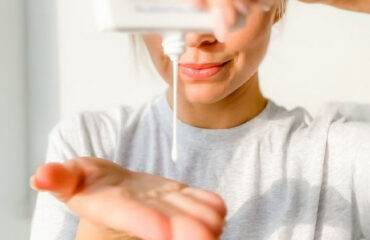
Most people apply much less sunscreen than is used to test it. SPF is measured using 2 milligrams of product per square centimetre of skin. In practice, that is about a teaspoon (about 5 ml) for the face, neck and ears, and about 35 ml, roughly seven teaspoons or a shot glass, for the whole body.
Studies consistently find that people apply only a quarter to a half of this amount, which means the protection they get is well below what the label states. Applying the right amount is one of the most effective changes you can make. If you find it hard to get enough on in one go, apply two thinner layers.
Reapplying sunscreen through the day
Reapplying sunscreen is not optional. It breaks down with UV exposure, sweat and contact with clothing, towels and hands, whatever its SPF. Reapply every two hours when you are outdoors, and straight after swimming, towelling off or heavy sweating.
If you spend most of the day indoors, a generous morning application is usually enough, with a top-up before you head out at midday or later. For beach days, sport and long outdoor activities, a two-hourly reminder on your phone is a simple way to stay on track.
Reapplying over makeup is a common challenge. Sunscreen sprays and powders can be applied over a finished face without disturbing it much. They are useful for midday top-ups, but they are hard to apply in a thick enough layer, so they do not replace a proper morning application.
Sunscreen on cloudy days and sun protection when driving
Sunscreen on cloudy days still matters. Cloud reduces UV but does not block it, and thin or broken cloud lets most of it through. UVA in particular passes through cloud easily, and the UV index on an overcast South African summer day can still be high enough to add to long-term skin damage.
Driving is an easily overlooked source of UV. Windscreens block most UV, but side windows in many cars let a good deal of UVA through. In South Africa, where drivers sit on the right, that means the right side of your face and your right arm receive more UVA than the left on long or regular drives. Sun protection when driving is simple: apply sunscreen to your face, neck and arms before a long drive, or wear long sleeves.
Sunscreen expiry dates and why they matter
Sunscreen expiry dates matter because the filters break down over time, and faster when the product is exposed to heat, sun or humidity, all common in a South African summer. A bottle left in your car, beach bag or a hot bathroom may lose its protection well before the printed date.
Check the expiry date on any bottle from last summer before you use it. Many products also show an open jar symbol with a number of months, which tells you how long the product lasts once opened. If a sunscreen has changed in texture, colour or smell, throw it away whatever the date says. If you are using the right amount, a bottle should not last more than a season anyway.
Sun Protection Beyond the Bottle: Clothing, Hats, Sunglasses and Shade
UV protective clothing and what UPF means
UPF stands for Ultraviolet Protection Factor and is the clothing version of SPF. A UPF 50 garment blocks about 98% of UV. Ordinary summer clothing offers less than most people think: a white cotton T-shirt may give only around UPF 5 to 10, and less again when it is wet.
UV protective clothing is worth considering if you spend long periods outdoors, particularly for water sports, hiking or any activity where reapplying sunscreen to your body is impractical. Long-sleeved rash vests are especially useful for swimming and surfing.
A wide brimmed hat for the face, scalp, ears and neck
The scalp, ears and back of the neck are among the most commonly missed areas, and they are also common sites of sun damage and skin cancer. A wide brimmed hat with a brim of at least 7.5 cm shades the face, ears and neck at the same time.
A cap protects the forehead and part of the nose but leaves the ears, lower face and neck exposed, so if you prefer a cap, be thorough with sunscreen on those areas. For children and anyone spending long periods outdoors, a broad brimmed hat is one of the simplest and most effective forms of sun protection.
Protecting the eyes from UV
Protecting the eyes matters as much as protecting the skin. Over the years, UV exposure is linked with cataracts and other eye conditions, and the thin skin around the eyes is easily burnt. Choose sunglasses that block 100% of UVA and UVB. Lens darkness is not a guide to UV protection: dark lenses without a UV filter can let in more UV, because the pupils widen behind them.
Look for sunglasses labelled UV400, which means they block wavelengths up to 400 nanometres, covering the full UVA and UVB range. Wraparound styles add protection by reducing UV from the sides.
Seeking shade, and why it does not replace sunscreen
Seeking shade lowers your UV exposure, but it does not remove it. UV reflects off sand, water and light surfaces and scatters through the sky, so it still reaches skin that is in the shade. Sitting under a beach umbrella without sunscreen still leaves you exposed to a significant share of the surrounding UV.
Shade works best combined with sunscreen, clothing and good timing. Staying out of direct sun between 10:00 and 15:00, when UV is strongest, is one of the most effective changes you can make during a South African summer.
Sunscreen for Specific Situations: Children, Lips and High-Exposure Days
Sun protection for children: what parents need to know
Sun protection for children matters because sunburn and sun exposure in childhood add significantly to lifetime skin cancer risk. Keep babies under six months out of direct sun altogether, using shade and clothing rather than sunscreen. From six months, sunscreen can be used on skin that cannot be covered.
For children, mineral sunscreens with zinc oxide are often preferred because they are less likely to irritate the skin. Choose a fragrance-free, water resistant formula with SPF 50. Apply it before children go outside and reapply every two hours, and more often after swimming. Remember the ears, back of the neck, tops of the feet and backs of the hands, which are easy to miss.
Lip balm with sun protection: why your lips need it too
The lips are often forgotten, but the lower lip in particular gets a lot of direct sun and has little natural protection. Long-term sun exposure can cause a rough, dry, scaly patch on the lip, which should be checked by a doctor if it does not heal.
A lip balm with sun protection of SPF 30 or higher makes a real difference. Reapply it at least as often as your sunscreen, and more often when you are eating, drinking or swimming. Tinted lip products with SPF are a practical option if you prefer some colour.
Planning for beach days, sport and long days outdoors
High-exposure days need more planning than your usual morning routine. Apply sunscreen generously before you go out, about 15 to 20 minutes ahead if you use a chemical formula. Take it with you and plan to reapply every two hours, with a small bottle in your bag or beach kit.
For sport and outdoor activity, choose a water resistant SPF 50 and think about what your activity involves. A runner sweats heavily and needs a formula that stays put; a surfer needs one that copes with long periods in the water. Sunscreen sticks are handy for reapplying around the face during activity without the mess of a lotion.
On high UV index days, no single measure is enough on its own. A broad spectrum SPF 50, protective clothing, a wide brimmed hat, UV-blocking sunglasses and shade during peak hours together give you the layered protection a South African summer calls for.
Making Sunscreen Part of Your Daily Routine
The most effective sunscreen is the one you will use every day, in the right amount, and reapply when you need to. The choice between mineral and chemical, or SPF 30 and SPF 50, matters less than the habit itself. Start with a formula that suits your skin and that you enjoy wearing, because texture and finish are the most common reasons people skip sunscreen on ordinary days.
If you are unsure where to start, a skincare therapist can help you choose a formula that suits your skin type, lifestyle and any concerns such as sensitivity or oiliness. Sun protection is not only a summer habit in South Africa: UV stays at meaningful levels all year, and the habits you build this summer will shape your skin’s health for years to come.
If you notice a new mole, or a mole that changes in size, shape or colour, have it examined by a doctor. If you are concerned about how years of sun have affected your skin, a skin consultation at Dr Alek Nikolic’s practice in Cape Town starts with a careful assessment of your skin as it is now, before any next steps are discussed. When you are ready, schedule a consultation with the practice.
Sun protection is one of the few areas of skin health where the evidence is clear and the steps are entirely within your control. Use it well this summer.
Frequently Asked Questions
What SPF should I use every day?
Use a broad spectrum sunscreen of at least SPF 30 every day, and SPF 50 for long periods outdoors or if you have fair skin. A higher SPF only gives you more protection if you apply enough of it and reapply regularly.
How much sunscreen should I put on my face?
About a teaspoon (about 5 ml) for the face, neck and ears. Most people apply far less than this, which greatly reduces the protection they actually get. For the whole body, the guide is about 35 ml, roughly seven teaspoons or a shot glass.
Is mineral or chemical sunscreen better for sensitive skin?
Mineral sunscreens, which use zinc oxide or titanium dioxide, are usually better tolerated by sensitive and reactive skin. Some people find that certain chemical filters sting or irritate, although individual responses vary, so a fragrance-free mineral formula is a sensible place to start.
How do I reapply sunscreen over makeup without ruining it?
Sunscreen sprays and SPF powders can be used over makeup for top-ups during the day, but they do not replace a proper layer of sunscreen in the morning. Apply sunscreen as the last step of your skincare routine before makeup, then use a spray or powder to top up.
Does sunscreen expire, and can I use last summer’s bottle?
Yes, sunscreen expires. Check the expiry date and the open jar symbol on the pack, and remember that heat and sun make it break down faster, so a bottle kept in a hot car or beach bag may not last that long. Throw away any sunscreen that has changed in smell, texture or colour.
Do I need to wear sunscreen on a cloudy day?
Yes. UV passes through cloud, and thin or broken cloud lets most of it through. In South Africa, the UV index can stay high on overcast summer days and at meaningful levels all year round.
What sun protection do children need?
Keep babies under six months out of direct sun, using shade and clothing. From six months, use a fragrance-free, water resistant sunscreen of SPF 50, often a mineral formula, on skin that clothing does not cover. Shade, UV protective clothing and a wide brimmed hat are just as important, particularly between 10:00 and 15:00.
Related Articles
- Summer Sun and Your Skin: A South African Guide
How UV affects every skin tone, and when to have a mole checked. - Sunburnt? How to Care for Your Skin Afterwards
What to do in the first days after a sunburn, and when to see a doctor.